<feed xmlns="http://www.w3.org/2005/Atom" xml:lang="en">
  <id>https://chartmogul.com/blog/feed.xml</id>
  <updated>2026-07-22T12:20:19+00:00</updated>
  <link rel="alternate" href="https://chartmogul.com/blog/"/>
  <link rel="self" href="https://chartmogul.com/blog/feed.xml"/>
  <icon>https://chartmogul.com/-/brand/icon-192.png</icon>
  <title>ChartMogul</title>


    <entry>
      <title><![CDATA[PLG Is Getting More Technical, More Cross-Functional, and More Human]]></title>
      <id>https://chartmogul.com/blog/plg-is-getting-more-technical-more-cross-functional-and-more-human/</id>
      <link href="https://chartmogul.com/blog/plg-is-getting-more-technical-more-cross-functional-and-more-human/"/>
      <published>2026-06-05T12:59:00+00:00</published>
      <updated>2026-06-05T12:59:00+00:00</updated>
      <summary><![CDATA[ChartMogul's city-based PLG meetup series brings operators together to tackle activation, hybrid GTM, and upmarket expansion with session recaps now available online.]]></summary>
      
        <author><name>Sara Archer</name></author>
      
      <content type="html" xml:lang="en"><![CDATA[<p>The vast majority of our customers are building ambitious SaaS businesses by way of smart, opinionated products.  They don’t have massive amounts of capital, rooms full of Enterprise AEs, or six-figure contracts. In the many years I’ve been at ChartMogul, my conversations with founders and operators often revolve around the same thing:the weeds of PLG complexity.</p><p>I wanted to create an event that didn’t shy away from the messy, important stuff.</p><p>Broken n8n workflows. Activation paths that look obvious internally, then fall apart in the real world. Compensation plans for hybrid GTM motions that drive the right incentives. This year, we’re running a series of intimate, city-based meetups for PLG founders and operators. We’re calling it The <a href="https://plg-labs.com/">Product-Led Growth Lab</a> series.</p><p>The first meetup took place in San Francisco during the week of Stripe Sessions. Brenna Loury, CRO of Doist spoke candidly about the challenges of moving up market in a PLG business. The group was still deep in discussion when it was time to move to the rooftop for refreshments and be joined by other conference attendees. This was a great sign that the topics were valuable, and it was much more enjoyable to finish the debates over some charcuterie and beer in the sunshine!</p><p>From there, we traveled on to the Croatian coast. In partnership with <a href="https://saastanak.com/">SaaStanak</a>, we pulled together two afternoons of PLG content overlooking the Mediterranean sea. Each session was standing room-only during a heat wave and yet people were engaged: asking sharp questions, sharing what they were seeing in their own companies, and making new connections. I’m really proud of how it turned out.</p><p>There was so much useful, operator-level knowledge shared, we wanted to make it available for anyone who didn’t make it to this year’s SaaStanak. So in true ChartMogul fashion, we’re recapping each session, highlighting the practical takeaways, and sharing the decks so you can come back to them whenever you need.</p><h2 id="jump-to-a-presentation">Jump to a presentation</h2><ol><li><a href="#the-expansion-engine-architecting-a-scalable-plg-stack-for-automated-upsells">The Expansion Engine: Architecting a Scalable PLG Stack for Automated Upsells</a>, <a href="https://www.linkedin.com/in/tommandrews/">Tom Andrews</a></li><li><a href="#when-automations-guess-wrong-behavior-shows-what-happened-users-tell-you-why">When Automations Guess Wrong: Behavior Shows What Happened. Users Tell You Why</a>, <a href="https://www.linkedin.com/in/aleksandra-korczynska-b6ab8485/">Aleksandra Korczyńska</a></li><li><a href="#from-traditional-saas-to-ai-native-in-5-days-3-companies-that-did-it">From Traditional SaaS to AI-Native in 5 Days: 3 Companies That Did It</a>, <a href="https://www.linkedin.com/in/wesbush/">Wes Bush</a></li><li><a href="#ltv-has-a-blind-spot-findings-from-3-700-saas-businesses-over-6-years">LTV Has a Blind Spot: Findings from 3,700 SaaS Businesses Over 6 Years</a>, <a href="https://www.linkedin.com/in/thomasanastaselos/">Thomas Anastaselos</a></li><li><a href="#people-led-growth-fixing-your-product-s-first-impression-and-path-to-activation">People-Led Growth: Fixing Your Product’s First Impression and Path to Activation</a>, <a href="https://www.linkedin.com/in/paulinaspaccarotella/">Paulina Spaccarotella</a></li><li><a href="#invisible-plg">Invisible PLG</a>, <a href="https://www.linkedin.com/in/anazrno/">Ana Zrno</a></li><li><a href="#workshop-from-1m-20m-arr-growth-levers-and-new-signals-for-success">[Workshop] From $1M–$20M ARR: Growth Levers and New Signals for Success</a>, <a href="https://www.linkedin.com/in/smarcher18/">Sara Archer</a> and <a href="https://www.linkedin.com/in/kyle-poyar/">Kyle Poyar</a></li><li><a href="#where-plg-meets-sales-building-a-hybrid-growth-engine-in-practice">Where PLG Meets Sales: Building a Hybrid Growth Engine in Practice</a>, <a href="https://www.linkedin.com/in/marko-kebe-00090a138/">Marko Kebe</a></li><li><a href="#the-launch-to-adoption-gap-why-fast-shipping-doesn-t-equal-product-growth">The Launch to Adoption Gap: Why Fast Shipping Doesn’t Equal Product Growth</a>, <a href="https://www.linkedin.com/in/nataliakimlickova/">Natália Kimličková</a></li></ol><h2 id="the-expansion-engine-architecting-a-scalable-plg-stack-for-automated-upsells">The Expansion Engine: Architecting a Scalable PLG Stack for Automated Upsells</h2><custom-embed url="https://drive.google.com/file/d/1vHTjPndmhDWiiLN4z68ig8f4HM6FbbOO/preview"></custom-embed><h3 id="key-takeaways">Key takeaways</h3><ul><li><strong>Expansion needs connected data, not just better timing.</strong> Tom showed how expansion becomes a larger share of revenue as SaaS companies scale, but most teams are still trying to act on signals trapped across product, CRM, billing, and automation tools. The fix starts with building a lightweight “Data Rome”: a central layer where usage, customer, and account data can be routed into workflows.</li><li><strong>Automated upsells depend on signal maturity.</strong> Tom broke expansion signals into three levels: thresholds, trends, and propensity. Thresholds are simple and reliable, but reactive. Trends use velocity and frequency to spot momentum earlier. Propensity models are more predictive, but require deeper historical data, data density, and technical maintenance.</li><li><strong>AI works best inside the automation layer.</strong> The idea here isn’t to “AI”ify the upsell motion. Rather, it’s about embedding AI into key workflows: triggered by usage data, enriched with account context, routed by business logic, and used to draft outreach or create tasks for the team.</li></ul><h3 id="why-it-matters">Why it matters</h3><p>Expansion is often talked about like a sales execution problem: find the right moment, write the right email, make the right offer.</p><p>Tom’s session showed that, for many SaaS businesses, it’s actually an infrastructure problem. When the right data flows into the right workflow, expansion becomes more timely, more relevant, and much easier to scale.</p><h2 id="when-automations-guess-wrong-behavior-shows-what-happened-users-tell-you-why">When Automations Guess Wrong: Behavior Shows What Happened. Users Tell You Why</h2><custom-embed url="https://drive.google.com/file/d/1BYGNW6RY64YBOwKlxClGx9LaF1kZBA49/preview"></custom-embed><h3 id="key-takeaways-2">Key takeaways</h3><ul><li><strong>PLG needs to rebuild the listening loop that sales-led teams never lost.</strong> Sales-led conversion is higher because reps don’t just react to behavior. They ask what’s getting in the way, then adapt the message, timing, proof point, or offer. Aleksandra’s point was that PLG teams can replicate that without making everything manual: ask targeted questions at key moments, turn those answers into structured data, and use them to route users into more relevant automated journeys.</li><li><strong>Feedback is the missing segmentation layer.</strong> Behavioral data can tell you that a high-intent user didn’t upgrade, or that a once-active account has gone quiet. But it can’t tell you whether the blocker is budget, security review, missing functionality, timing, low job volume, or a bad experience. Aleksandra showed how asking one well-timed question turns a vague lifecycle trigger into a specific next step.</li><li><strong>AI makes open-text feedback operational at PLG scale.</strong> You can now use AI to categorize open-text data, identify patterns, and route users into the right workflow. That turns qualitative feedback into structured data teams can actually use in lifecycle automations.</li></ul><h3 id="why-it-matters-2">Why it matters</h3><p>Read this deck if your lifecycle automations are technically “working,” but still feel too generic. Aleksandra’s session is a good reminder that behavior tells you what happened, but user feedback tells you what to do next.</p><h2 id="from-traditional-saas-to-ai-native-in-5-days-3-companies-that-did-it">From Traditional SaaS to AI-Native in 5 Days: 3 Companies That Did It</h2><custom-embed url="https://drive.google.com/file/d/1nKe3ov-oHKfQX2he_GVQ4pLWdHf23phm/preview"></custom-embed><h3 id="key-takeaways-3">Key takeaways</h3><ul><li><strong>AI-native changes the order of value.</strong> Traditional SaaS makes users earn the outcome: learn the interface, configure the settings, import the data, build the workflow, then eventually see value. Wes’s point was that AI-native products should flip that sequence. Start with the smallest meaningful outcome a user can get in 60 seconds, then design the product experience around delivering that result as quickly as possible.</li><li><strong>The product has to have an opinion.</strong> A lot of traditional SaaS puts the work on the user: blank states, setup decisions, configuration, “choose your own adventure” onboarding. Wes argued that AI-native products should do more of the deciding for the user. Let the user approve instead of making them build from scratch.</li><li><strong>Don’t automate away the user’s sense of ownership.</strong> Wes used the Betty Crocker cake mix story to show why “easier” isn’t always better. The original mix only required water, but people rejected it because it felt too artificial, like they hadn’t really made anything. When Betty Crocker added the egg back in, people felt involved again. For AI-native products, the lesson is to remove the tedious work, but keep the one small action that makes the result feel trusted, personal, and earned.</li></ul><h3 id="why-it-matters-3">Why it matters</h3><p>This session turns “AI-native” from a vague strategy into a product exercise: pick the first valuable outcome, remove the work around it, keep the moment that creates trust, and build the experience backwards from there.</p><p>The deck is especially useful because it gives teams concrete prompts and frameworks they can use in conversation: What could the product do before the user has to learn the product? Which decisions should AI make by default? And what small action still needs to stay so the user feels ownership of the result?</p><h2 id="ltv-has-a-blind-spot-findings-from-3-700-saas-businesses-over-6-years">LTV Has a Blind Spot: Findings from 3,700 SaaS Businesses Over 6 Years</h2><custom-embed url="https://drive.google.com/file/d/1xKqNZ08DBsR0JQ2yxPTnfrlduOFvJOQM/preview"></custom-embed><h3 id="key-takeaways-4">Key takeaways</h3><ul><li><strong>LTV is useful, but it is not as trustworthy as it looks.</strong> Thomas tested 39,000 LTV predictions against what actually happened across 3,688 SaaS businesses. The median cohort generated 9% less revenue than LTV predicted over 12 months, which is not catastrophic. But the median hides the real problem: 34.5% of cohorts were wrong by more than 50% in either direction.</li><li><strong>LTV breaks when ARPA and churn assumptions break at the same time.</strong> The standard formula uses blended account-level ARPA and recent account-wide churn. That means it can overestimate new customers who have not expanded yet, or misread cohorts that churn differently from the broader customer base. Sometimes those errors cancel out. Sometimes they compound, and the number gets very wrong.</li><li><strong>Some businesses should discount LTV more than others</strong>. The data showed that reliability varies by segment. E-commerce, infra/dev tools, and workplace/productivity had higher rates of badly wrong LTV predictions. Larger accounts also had more systematic overprediction. Thomas’s practical recommendation was not to throw LTV out, but to treat it as a compass and use it alongside cohort revenue curves, net MRR movements, and observed payback period.</li></ul><h3 id="why-it-matters-4">Why it matters</h3><p>This presentation showcases brand new data from our insights team. LTV can still help teams make decisions about CAC, payback, and segment investment, but only if they understand where the formula breaks and check it against what customers are actually doing.</p><h2 id="people-led-growth-fixing-your-product-s-first-impression-and-path-to-activation">People-Led Growth: Fixing Your Product’s First Impression and Path to Activation</h2><custom-embed url="https://drive.google.com/file/d/1OGrtg1l9yHPeXzi1aukOMmFYm5sv7KlU/preview"></custom-embed><h3 id="key-takeaways-5">Key takeaways</h3><ul><li><strong>Users experience onboarding emotionally.</strong> Paulina reframed activation through a more human lens: users are deciding very quickly whether they’re in the right place, whether the product understands their problem, and whether they feel capable of moving forward.</li><li><strong>Great onboarding reduces the distance between hope and first win.</strong> Every user arrives with a problem, but also with hope: that this product might finally help them do the thing they came to do. Paulina’s human activation loop captures that journey: Problem → Hope → First Win → Momentum → Trust. The faster a product can help someone feel real progress, the more trust it earns.</li><li><strong>Audit the experience through one specific human.</strong> Paulina’s workshop pushed teams to stop auditing onboarding as themselves and start auditing through the lens of their primary user. What did this person hope would happen? What do they expect next? Does this screen create momentum, or does it introduce confusion, friction, or a trust break?</li></ul><h3 id="why-it-matters-5">Why it matters</h3><p>This content is a useful reset for teams that treat onboarding like something you “set and forget.” Paulina’s framework gives teams a simple way to revisit it every month: look at the experience through your user’s eyes, find where trust breaks or momentum disappears, and fix one moment that gets them closer to a first win.</p><h2 id="invisible-plg">Invisible PLG</h2><custom-embed url="https://drive.google.com/file/d/1ah3naK2TZoKSOG_FxHIxff_h_wk2mYPT/preview"></custom-embed><h3 id="key-takeaways-6">Key takeaways</h3><ul><li><strong>The first evaluator may no longer be human.</strong> Ana challenged one of the default assumptions behind PLG: that there is always a person navigating the product, clicking through the flow, and emotionally responding to the UX. In an agent-first world, the “buyer” might be an operations agent tasked with reducing support backlog, comparing vendors, testing a sandbox, and measuring cost.</li><li><strong>Invisible PLG is built for systems, not just people.</strong> The shift is from persuading humans through UX to enabling systems through docs, schemas, APIs, machine-readable pricing, autonomous sandboxes, and deterministic onboarding. The product still has to be useful and usable, but it also has to communicate value programmatically.</li><li><strong>Documentation becomes GTM infrastructure.</strong> Ana’s uncomfortable point was that the things many teams treat as support or engineering concerns may become acquisition infrastructure. If agents are part of the evaluation path, documentation, schemas, pricing logic, API reliability, and outcome instrumentation become part of how the product gets discovered, evaluated, and bought.</li></ul><h3 id="why-it-matters-6">Why it matters</h3><p>This session gives teams a useful diagnostic for the next era of PLG: could an AI agent discover, evaluate, test, price, and integrate with your product on its own?</p><p>If the answer is no, your product may still be visible to humans, but increasingly invisible to the systems shaping how software gets evaluated.</p><h2 id="workshop-from-1m-20m-arr-growth-levers-and-new-signals-for-success">[Workshop] From $1M–$20M ARR: Growth Levers and New Signals for Success</h2><custom-embed url="https://drive.google.com/file/d/1ybbM3OGsD28H1VsvEHRyeC_OgthpQ7D1/preview"></custom-embed><h3 id="key-takeaways-7">Key takeaways</h3><ul><li><strong>The growth machine has to change after $1M ARR.</strong> ChartMogul data shows that getting to $20M ARR is not just about doing more of what got you to $1M. As companies scale, the strongest performers improve the quality of the revenue machine: higher ARPA, more expansion, better retention, more annual contracts, and stronger reactivation.</li><li><strong>Revenue quality beats revenue speed.</strong> Growth rate matters, but speed alone is not the full story. Sara and Kyle made the case that durable growth comes from getting more out of the customer base you already have: retaining better, expanding more, pricing smarter, and protecting the revenue you worked so hard to win.</li><li><strong>The founder’s edge has to become team language.</strong> Remarkable companies are usually built by remarkable people, but the real unlock is making that restlessness scalable. The founder’s taste, standards, and refusal to accept “good enough” need to become a way of working the whole team can understand, repeat, and raise themselves toward.</li></ul><h3 id="why-it-matters-7">Why it matters</h3><p>This workshop turns “how do we get to $20M ARR?” into a sharper operating question: what has to get better as we scale?</p><p>The answer is rarely one silver bullet. It’s usually a set of compounding improvements across ARPA, retention, expansion, focus, and execution, paired with the leadership standards that make those improvements stick.</p><h2 id="where-plg-meets-sales-building-a-hybrid-growth-engine-in-practice">Where PLG Meets Sales: Building a Hybrid Growth Engine in Practice</h2><custom-embed url="https://drive.google.com/file/d/1rDDAFk9AeMo2tDCNQSg7aYUbX0LLJmi-/preview"></custom-embed><h3 id="key-takeaways-8">Key takeaways</h3><ul><li><strong>Hybrid growth needs flexible swimlanes.</strong> Marko showed how BetrSign moved from a relationship-led, enterprise-heavy motion into a hybrid model with self-serve, trial-to-buy, digital sales, and account-based sales. The trick is not assuming every household-name logo needs an enterprise sales motion, or that every smaller account wants to self-serve. You need clear lanes, but enough flexibility to move buyers into the journey that matches how they actually want to buy.</li><li><strong>“Where are all the self-serve conversions?”</strong> is a very real moment in many PLG journeys. Before declaring yourself product-led, it helps to ask whether the product can actually be evaluated, adopted, and purchased without seven meetings, three lawyers, and one heroic sales engineer.</li><li><strong>Compensation and KPIs have to change with the motion.</strong> A hybrid GTM model gets weird fast if the team is still rewarded like a traditional sales org. BetrSign moved away from booked ACV as the main measure and toward realized revenue, MRR growth on existing accounts, product feedback loops, demos, and content inputs.</li></ul><h3 id="why-it-matters-8">Why it matters</h3><p>Hybrid GTM is not just a self-serve funnel bolted onto sales. It’s a way to solve the system and process problems that show up when different buyers need different paths: how you route accounts, define ownership, design incentives, set product boundaries, and meet customers where they actually are.</p><h2 id="the-launch-to-adoption-gap-why-fast-shipping-doesn-t-equal-product-growth">The Launch to Adoption Gap: Why Fast Shipping Doesn’t Equal Product Growth</h2><custom-embed url="https://drive.google.com/file/d/1LI9n3yMYM23xPFUSWKnR1vhyajrud17Q/preview"></custom-embed><h3 id="key-takeaways-9">Key takeaways</h3><ul><li><strong>Fast shipping does not equal product adoption or revenue growth.</strong> The core tension in Natalija’s talk is that teams have optimized for release velocity, but not for user attention. Shipping more features can create the illusion of progress, while adoption stays flat or even gets worse. The real question is not “did we ship it?” It’s “did the right users notice it, understand it, try it, and make it part of their workflow?”</li><li><strong>A release is a technical event. A launch is a behavior-change system.</strong> Natalija drew a useful line between releasing code and actually creating adoption. Too many launches still rely on passive discovery, changelogs, one-off announcements, and broad campaigns. Modern launches need to be scored, targeted, landed, and measured with intention.</li><li><strong>Targeting should be behavioral, not just demographic.</strong> The deck makes a strong case that demographics are proxies, but behavior is signal. The best launch moments come from what users are already doing: hitting friction, repeating a manual action, reaching a milestone, or entering a lifecycle moment where habits are still forming.</li></ul><h3 id="why-it-matters-9">Why it matters</h3><p>This is one of the freshest takes on SaaS product marketing I’ve seen in a while because it names the problem most teams are living inside: the product is shipping faster than users can absorb.</p><p>Natalija’s framework reframes product marketing from “announce what shipped” to “design for adoption.” In a world where every team is launching constantly, the advantage goes to the companies that can score what deserves attention, target the right users at the right moment, and turn a release into actual behavior change.</p><h2 id="strong-closing-thoughts-strong"><strong>Closing thoughts</strong></h2><p>Taken together, the sessions made one thing pretty clear: PLG is no longer just about removing sales from the buying journey.</p><p>It’s data architecture. Feedback loops. Onboarding psychology. Hybrid GTM design. Launch systems. Agent-readable infrastructure. And yes, still, the very human work of helping someone understand why your product matters to them.</p><p>PLG is getting more technical, more operational, and more human all at once.</p>]]></content>
    </entry>


    <entry>
      <title><![CDATA[From Signup to Value: How AI Is Changing Activation in SaaS]]></title>
      <id>https://chartmogul.com/blog/from-signup-to-value-how-ai-is-changing-activation-in-saas/</id>
      <link href="https://chartmogul.com/blog/from-signup-to-value-how-ai-is-changing-activation-in-saas/"/>
      <published>2026-04-07T15:00:00+00:00</published>
      <updated>2026-04-07T15:00:00+00:00</updated>
      <summary><![CDATA[AI is compressing time-to-value in SaaS, but most teams still measure activation with outdated frameworks that miss whether users build habits or just sample quick outputs.]]></summary>
      
        <author><name>Lisa Heiss</name></author>
      
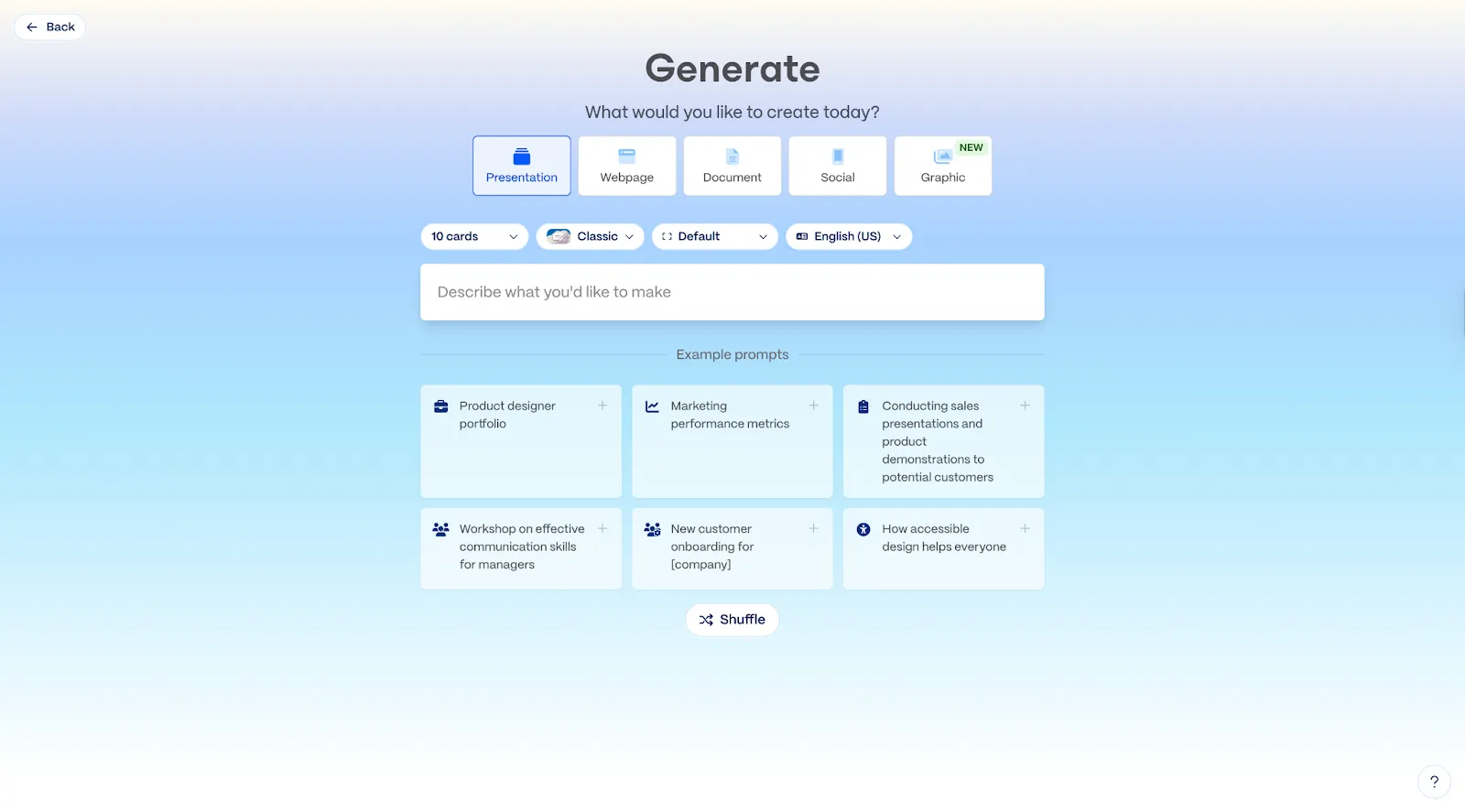
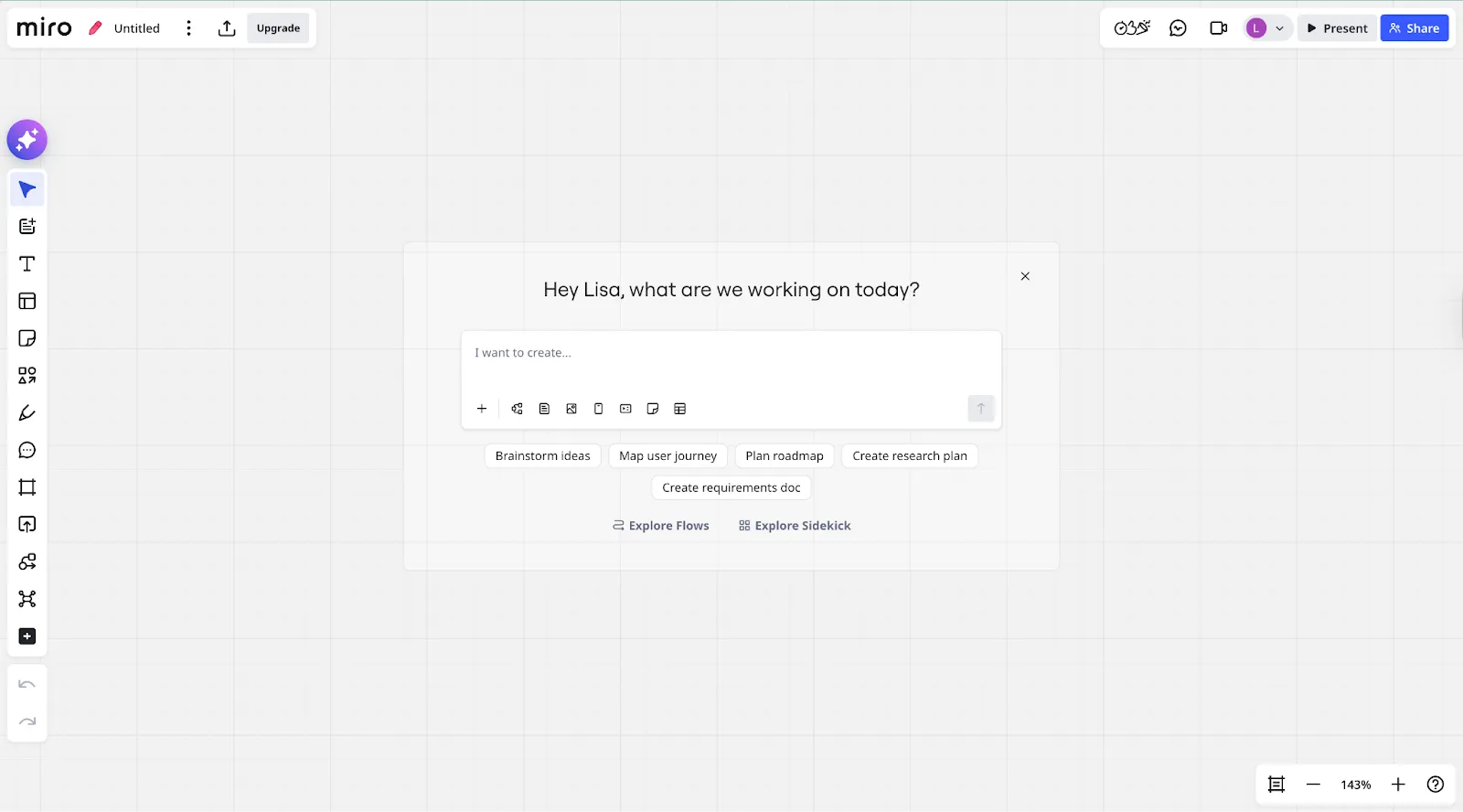
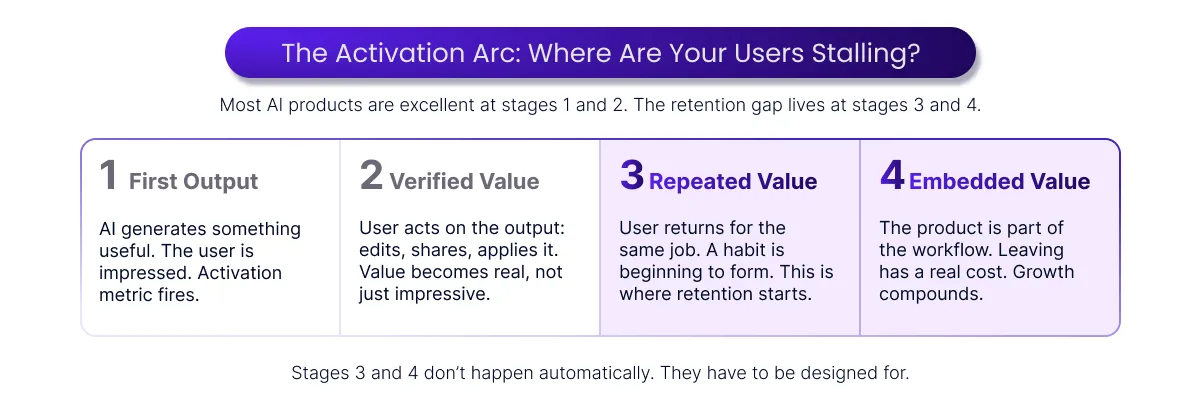
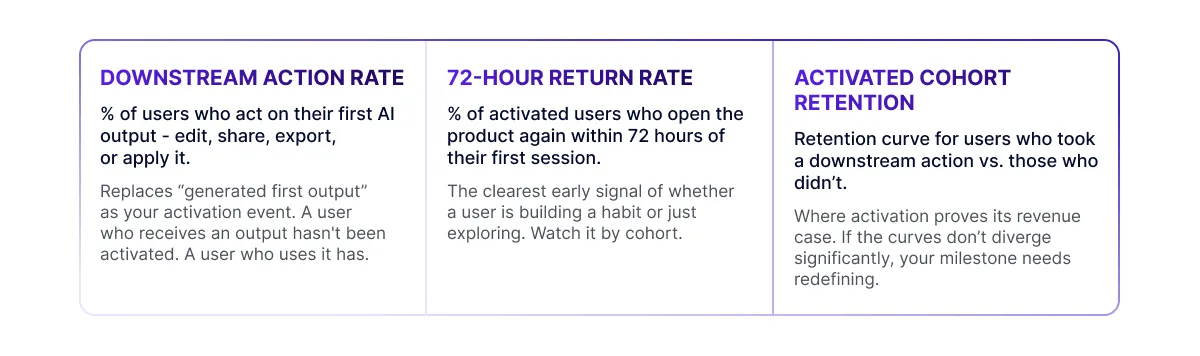
      <content type="html" xml:lang="en"><![CDATA[<p>Users are trying a new product and getting to value faster than ever. That first “oh, this actually works” feeling, which used to take days of setup and onboarding, is now happening in the first session, sometimes in the first few minutes.</p><p>AI is doing for activation what mobile did for distribution: compressing the time between intent and outcome in a way that makes the old playbook feel irrelevant.</p><p>But here’s something that ChartMogul’s research has started to surface, and that many SaaS teams haven’t fully reckoned with yet: <strong>the AI-native products that are growing the fastest are also, in many cases,</strong> <a href="https://chartmogul.com/reports/saas-retention-the-ai-churn-wave/">churning the fastest</a><strong>.</strong> Some are 3x more likely to reach $1M ARR in six months. They’re also showing weaker net revenue retention than their traditional SaaS counterparts.</p><p>That’s a tension worth sitting with. Fast early growth. Weak retention. What’s going on?</p><p>The answer isn’t that AI is bad for retention. It’s that AI is changing what activation actually means and most products haven’t caught up to that change yet. They’re measuring it the old way while the ground has shifted.</p><h2 id="why-activation-is-harder-than-it-looks-right-now">Why Activation Is Harder Than It Looks Right Now</h2><p>For most of SaaS history, the activation problem was straightforward, even if solving it wasn’t: users had to get through setup before they experienced value, and too many dropped out during that phase.</p><p>The fix was to shorten and simplify setup—better onboarding flows, fewer required fields, faster time-to-first-value.</p><p>AI has largely solved that problem. You can now sign up for a product, describe what you need, and receive something useful in under a minute.</p><p>The empty-state problem—that hostile blank canvas you used to face on day one—is disappearing. Products are generating first outputs, pre-populating environments, and guiding users through natural conversation rather than step-by-step tutorials.</p><p>This is genuinely good. Faster time-to-value is real progress.</p><p>But it’s created a subtler problem that’s harder to see in a dashboard: <strong>when AI delivers value immediately, it’s doing the work that the user used to do</strong> and that work had a side effect nobody talked about. It built understanding. It built a mental model of the product. It created the cognitive foundation that makes people come back.</p><p>When AI skips that friction entirely, users experience value passively. They’re impressed. They may even tell someone about it. But they haven’t integrated the product into how they actually work and without that integration, the next time they need to solve the same problem, there’s no strong reason to return to you specifically.</p><p><strong>THE SHIFT HAPPENING RIGHT NOW</strong></p><ul><li><strong>Old activation problem:</strong> Users dropped off before reaching value. Time-to-value was too long.</li><li><strong>New activation problem:</strong> Users reach value quickly but passively. First impressions don’t compound into habits.</li></ul><p>Most activation dashboards are still measuring the first problem. The second one shows up in your churn data six weeks later.</p><h2 id="what-the-best-ai-native-products-are-actually-doing">What the Best AI-Native Products Are Actually Doing</h2><p>There are four patterns emerging in products that are getting AI-driven activation right. They’re not evenly distributed, most products have adopted one or two. The ones with compounding growth have all four.</p><h3 id="pattern-1-ai-generated-first-outputs">Pattern 1: AI-Generated First Outputs</h3><p>Instead of starting users with a blank canvas, the best products generate a first working artifact immediately. A presentation. A CRM pipeline. A draft document. Something the user can react to, edit, and make their own—rather than build from scratch.</p><p>Gamma is the clearest example of it. When you sign up, you describe what you want to create and receive a fully styled presentation within seconds. You’re not starting from zero, you’re starting from a response. That shift is enormous for perceived value.</p><img src="/_notion/blog/.imports/asset-image-1-XmtwsONR.webp" alt="" width="1600" height="887"><p>What makes this work isn't just speed. It's specificity—an output that feels tailored to what the user actually described creates a different psychological response than one that feels templated. The user thinks: <em>this understood what I needed.</em> That moment of recognition is what makes them want to keep going, and come back.</p><h3 id="pattern-2-ai-assisted-setup">Pattern 2: AI-Assisted Setup</h3><p>In most SaaS products, value is gated behind configuration—connecting tools, importing data, building workflows. This is where momentum breaks. Users who sign up intending to try something run out of patience before they experience anything worth staying for.</p><p>AI removes this gate. HubSpot uses AI to generate CRM pipelines from minimal input. Intercom builds help centers and bots from existing content. The product creates a working starting environment so users can skip configuration and enter the value phase directly.</p><p>The principle: Setup isn’t eliminated. It’s shifted from user effort to model inference.</p><h3 id="pattern-3-conversational-onboarding">Pattern 3: Conversational Onboarding</h3><p>Traditional onboarding is a fixed flow: Step 1 → Step 2 → Step 3.</p><p>Conversational AI replaces it with adaptive dialogue—the product asks simple questions and responds to answers in real time, moving users toward value through conversation rather than a predetermined script. In this sense, onboarding stops being a flow and becomes a feedback loop. Done well, this captures something that forms and tutorials never could: <strong>real user intent.</strong> Not just what they typed into a field, but what they’re actually trying to accomplish, for whom, and in what context. The better the product understands that context, the more useful every subsequent AI interaction becomes.</p><p>Notion’s AI assistant is a strong example. It doesn’t explain itself upfront, it helps users do things as they go, responding to what they’re working on rather than guiding them through a predetermined path.</p><h3 id="pattern-4-context-aware-ai-inside-the-workflow">Pattern 4: Context-Aware AI Inside the Workflow</h3><p>The most durable pattern isn’t about the first session at all. It's about what happens inside the product over time. The best AI-native tools become more useful the more you use them, because they accumulate context: your preferences, your project history, your way of working.</p><p>Miro’s AI is a good example. It understands what’s already on the canvas. It doesn’t introduce a new flow—it works on top of what exists, summarizing, clustering, generating from context. The AI isn’t a feature you visit. It’s embedded in how the product works.</p><p>This is the pattern that creates genuine retention. Each use makes the product more valuable. Each use also makes leaving more costly, because what you’d lose isn’t just a tool—it’s accumulated context that took time to build.</p><img src="/_notion/blog/.imports/asset-image-quhql10l.webp" alt="" width="1600" height="888"><h2 id="the-gap-most-products-are-missing">The Gap Most Products Are Missing</h2><p>Here’s the thing about those four patterns: they all solve the entry problem elegantly. They compress the time between signup and first value. They make the first session impressive.</p><p>What they don’t automatically solve is what happens next.</p><p>Think about the user journey this way. There’s a difference between a user who generated a Gamma presentation, was impressed, and closed the tab and a user who generated that presentation, edited it, shared it with their team, and came back the next week to build another one. Both users are “activated” by any standard dashboard definition. Only one is a retained user.</p><p>The first user experienced something like a demo. The second integrated the product into how they work. That gap is where most AI-native products are quietly losing revenue and it doesn't show up until you look at 60-day retention curves rather than week-one activation rates.</p><p>Or as I like to say<em>: “The fastest path to first value isn’t the same as the shortest path to a durable habit.”</em></p><p>What creates the difference? Three things, consistently:</p><p><strong>Whether the user acts on the output, not just receives it.</strong> A user who edits, shares, exports, or applies what AI generated has crossed a threshold. They’ve made the output their own. That crossing—from passive recipient to active user—is the moment where value becomes real rather than impressive.</p><p><strong>Whether they have a reason to return.</strong> This sounds obvious but almost no one designs for it explicitly. What is the specific, concrete event that brings this user back tomorrow?</p><p>For Loom, it was someone watching your video. For Slack, it was a conversation waiting for you. For Cursor, it’s your codebase living inside the product. The return trigger needs to be built—it doesn’t appear on its own.</p><p><strong>Whether the product accumulates context over time.</strong> Traditional SaaS created switching costs through data: your files, your contacts, your history. AI-native products need to build the equivalent deliberately. The product should know more about you—your preferences, your patterns, your team—with every session. That accumulation is what makes leaving genuinely costly.</p><img src="/_notion/blog/.imports/asset-Image-for-a-blog-3--GcUEbvo.webp" alt="" width="1200" height="410"><p><strong>What This Means for Your Metrics</strong></p><p>Most SaaS teams track activation as a binary: did the user reach the key milestone or not? That works fine when activation is the hard problem. When the hard problem shifts to retention quality, you need metrics that see further into the user journey.</p><p>Three additions that most teams aren’t making yet, and that will tell you more than your current activation rate:</p><img src="/_notion/blog/.imports/asset-Image-for-a-blog-4-24GOn1Jb.webp" alt="" width="1200" height="356"><p>These three metrics together tell a story that activation rate alone can’t: not just whether users are reaching value, but whether that value is sticking.</p><h2 id="what-to-do-differently-starting-now">What to Do Differently Starting Now</h2><p>None of this requires rebuilding your product. It requires sharpening what you’re focused on.</p><p><strong>Redefine your activation event.</strong> If your current activation milestone is “completed onboarding” or “generated first output,” you’re measuring a moment that precedes value, not one that proves it. Add a downstream action requirement—the user edited, shared, applied, or returned to the output. Your activation rate will drop. What you’re left with is a cohort that actually predicts retention.</p><p><strong>Design the return trigger explicitly.</strong> Before your next sprint, answer this question directly: What is the specific, concrete event that brings a user back to your product tomorrow? If the answer is a vague “because it’s useful” you haven’t designed a trigger. You’ve hoped for one. Return triggers are specific: a notification, a collaboration ping, a saved project waiting, a result that arrived. Build the one that fits your product.</p><p><strong>Look at where context accumulates.</strong> Trace the user journey and ask: at what point does the product start knowing something meaningful about this user that it didn’t know before? If that point is far into the journey, or doesn’t exist, you’re not building the switching cost that creates durable retention.</p><p><strong>Separate your cohorts.</strong> In your analytics tool, build two cohorts: users who took a downstream action on their first AI output, and users who didn’t. Look at their retention at 30, 60, and 90 days. The gap between those curves is your activation opportunity and it’s usually larger than teams expect.</p><h2 id="the-new-activation-standard">The New Activation Standard</h2><p>AI has fundamentally changed what’s possible in the first session. Strong first outputs, self-building setup, and onboarding that adapts to what users actually say they need are real improvements. Products that haven’t adopted them are already behind.</p><p>But a great first session is now table stakes. The companies that compound growth over the next few years won’t be the ones with the slickest AI onboarding. They’ll be the ones that turn early value into lasting workflow habits and build their metrics, product choices, and growth bets around that full journey.</p><p>The ChartMogul data hints at what comes next. Fast early growth that never compounds into strong NRR isn’t a growth story. It’s an acquisition story with a retention problem. Closing that gap starts with redefining activation.</p><blockquote>“The fastest product to deliver value gets a foot in the door. The product that becomes part of the user’s workflow is the one that stays.”</blockquote><p><em>Lisa Heiss is a PLG and activation strategist & the founder of <a href="https://www.lisaheiss.com/">UXELERATE</a>, working with B2B SaaS founders from Seed through Series B on activation, conversion, and retention architecture.</em></p>]]></content>
    </entry>


    <entry>
      <title><![CDATA[ChartMogul + Crono: bringing outbound workflow to ChartMogul CRM]]></title>
      <id>https://chartmogul.com/blog/chartmogul-crono-bringing-outbound-leads-into-chartmogul-crm/</id>
      <link href="https://chartmogul.com/blog/chartmogul-crono-bringing-outbound-leads-into-chartmogul-crm/"/>
      <published>2026-02-09T13:49:00+00:00</published>
      <updated>2026-02-09T13:49:00+00:00</updated>
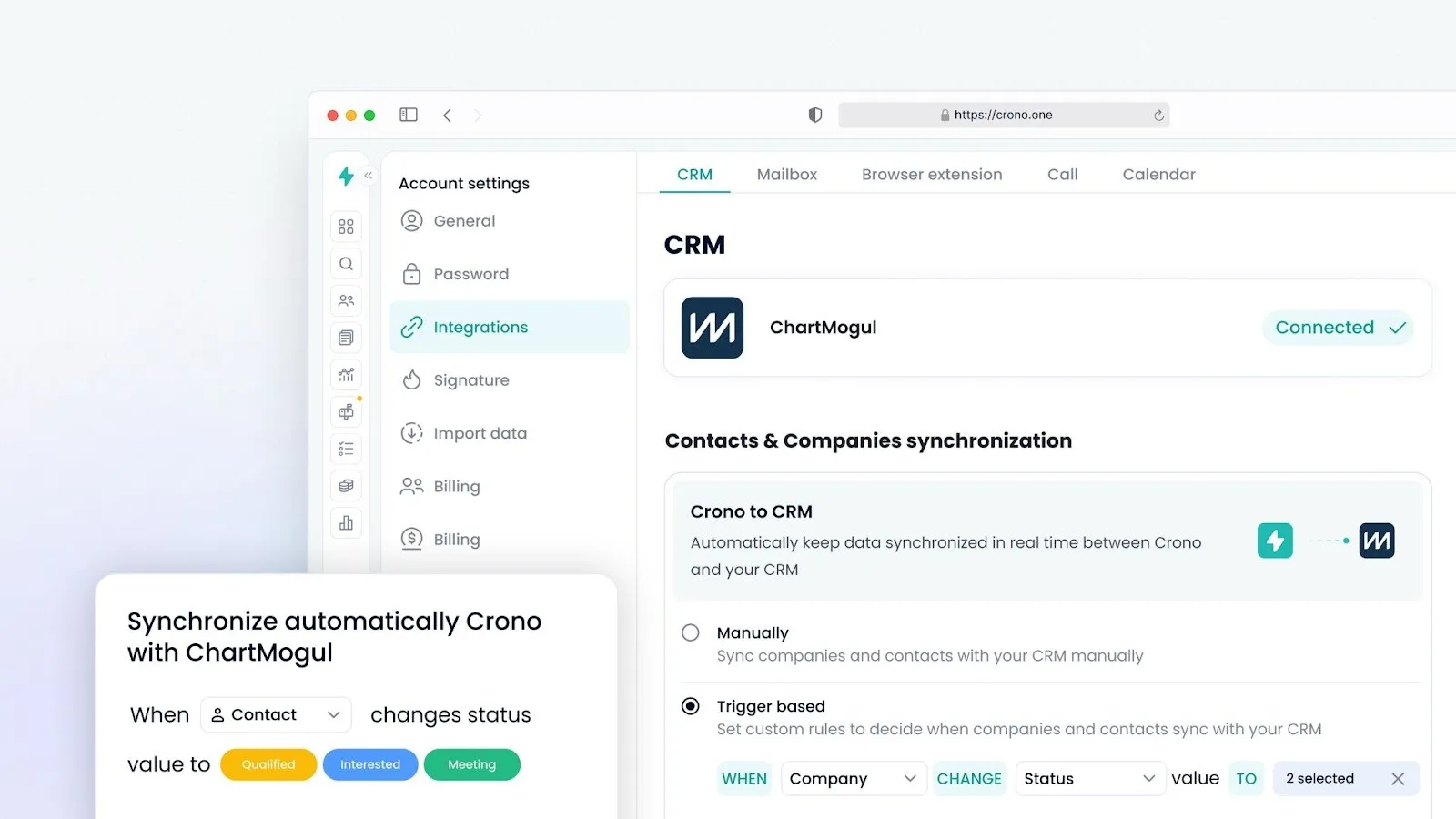
      <summary><![CDATA[ChartMogul's new Crono integration syncs outbound prospect data directly into your CRM, connecting pipeline-building workflows with subscription customer data for cleaner attribution.]]></summary>
      
        <author><name>Sara Archer</name></author>
      
      <content type="html" xml:lang="en"><![CDATA[<p>Outbound sales is really about one thing: starting the conversation.</p><p>When it’s done well, it isn’t about pressure or persuasion tricks. It’s about showing up with something genuinely worth offering. That could be an industry insight or data point, a sharp perspective, or a helpful asset compelling enough that the right person actually wants to respond.</p><p>Daniel Pink writes about this in <em>To Sell Is Human</em>. His point is that whether we realize it or not, we spend a lot of our lives trying to convince others of something. To change a mind, earn attention, or move an idea forward.</p><p>Startups are no different. Sales is part of the work. And outbound, done thoughtfully, is not grimy or wrong, but rather a business necessity.</p><p>The real question is whether you approach it carelessly, or whether you treat it as a craft.</p><p>So instead of trying to rebuild outbound inside ChartMogul, we partnered with a team that is already doing it exceptionally well: <a href="https://www.crono.one/">Crono</a>.</p><p>Crono is built for teams who take outbound seriously, not as a volume game, but as a focused way to build pipeline. ChartMogul is where those relationships live once they become real customers, with subscription context behind them.</p><p>Now, the two connect.</p><h2 id="how-the-integration-works">How the integration works</h2><p>Teams run outbound in Crono: building lead lists, managing sequences, and tracking engagement.</p><p>When a prospect becomes qualified — for example when their contact status changes to “Interested” — that company and contact can be pushed directly into ChartMogul CRM.</p><img src="/_notion/blog/.imports/asset-image-5aagrdfD.webp" alt="" width="1600" height="900"><p>This can happen manually with a single click, or automatically through trigger-based sync.</p><p>Once the record is created in ChartMogul, it’s tagged with Crono as the source, so teams can clearly see which relationships began through outbound.</p><p>The goal is simple: keep outbound activity where it belongs, while ensuring real prospects don’t stay siloed outside your subscription CRM.</p><h2 id="why-this-matters">Why this matters</h2><p>Many SaaS teams are rebuilding outbound motions in 2026.</p><p>CAC is up across SaaS, paid channels are more competitive, and inbound alone is not always enough to sustain pipeline, especially for teams selling into crowded markets.</p><p>At the same time, outbound is changing. AI has made a new wave of enrichment, targeting, and personalization possible at a scale that used to be unrealistic for smaller teams. Done well, outbound is becoming more affordable, more focused, and less about brute-force volume.</p><p>That is why so many teams are returning to outbound, not because it is trendy, but because it has become a more viable and necessary part of the growth mix again.</p><p>But outbound only works if the workflow stays connected.</p><p>The conversation might start in Crono, but once a relationship becomes real, it needs to move into a system that reflects the full business context: revenue, usage, and ongoing communication with the customer over time.</p><p>Prospecting and sequencing belong in a tool like Crono, purpose-built as an outbound engine for SDR teams to run effective outreach campaigns, powered by accurate data, AI, and automation to maximize results. Customer lifecycle management belongs in ChartMogul, where subscription data and relationship history come together in one place.</p><p>This integration is a first step toward making that handoff seamless, so outbound effort does not stay disconnected from the revenue system that comes next.</p><h2 id="what-s-next">What’s next</h2><p>The current integration supports syncing companies and contacts into ChartMogul CRM.</p><p>From here, there is room to expand into deeper activity and opportunity synchronization depending on what teams need most.</p><p>We wanted to start with the core use case first, ship something immediately useful, and build from real customer workflows over time.</p><h2 id="try-it-out">Try it out</h2><p>The Crono integration is available now inside ChartMogul.</p><p>If outbound is part of your growth motion this year, we’d love for you to try it and share feedback as we continue building.</p>]]></content>
    </entry>


    <entry>
      <title><![CDATA[Introducing the native ChartMogul integration for n8n]]></title>
      <id>https://chartmogul.com/blog/introducing-the-native-chartmogul-integration-for-n8n/</id>
      <link href="https://chartmogul.com/blog/introducing-the-native-chartmogul-integration-for-n8n/"/>
      <published>2026-01-16T13:19:00+00:00</published>
      <updated>2026-01-16T13:19:00+00:00</updated>
      <summary><![CDATA[ChartMogul's native n8n integration lets you automate customer data workflows with no-code setup, built-in authentication, and direct access to core CRM operations.]]></summary>
      
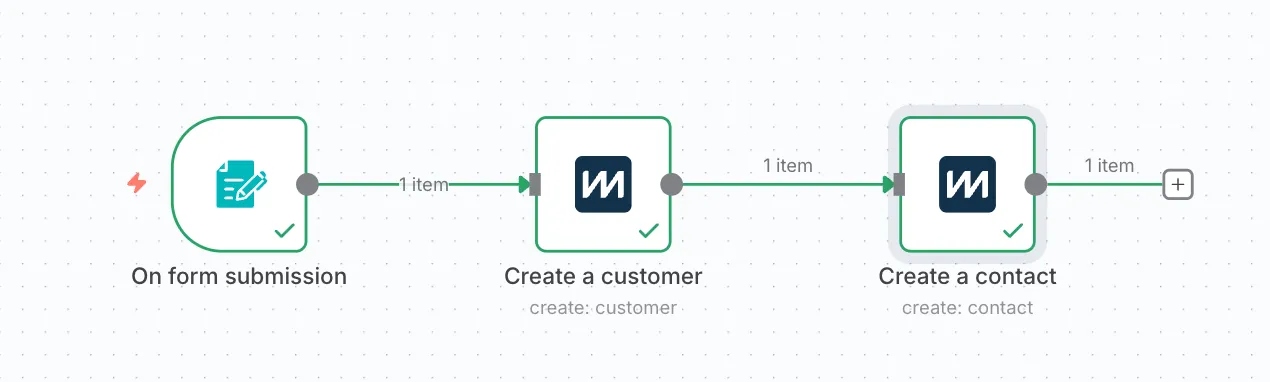
        <author><name>Thomas Anastaselos</name></author>
      
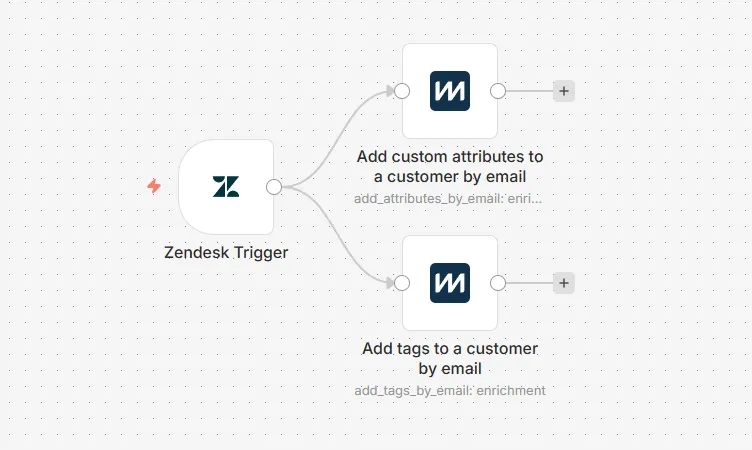
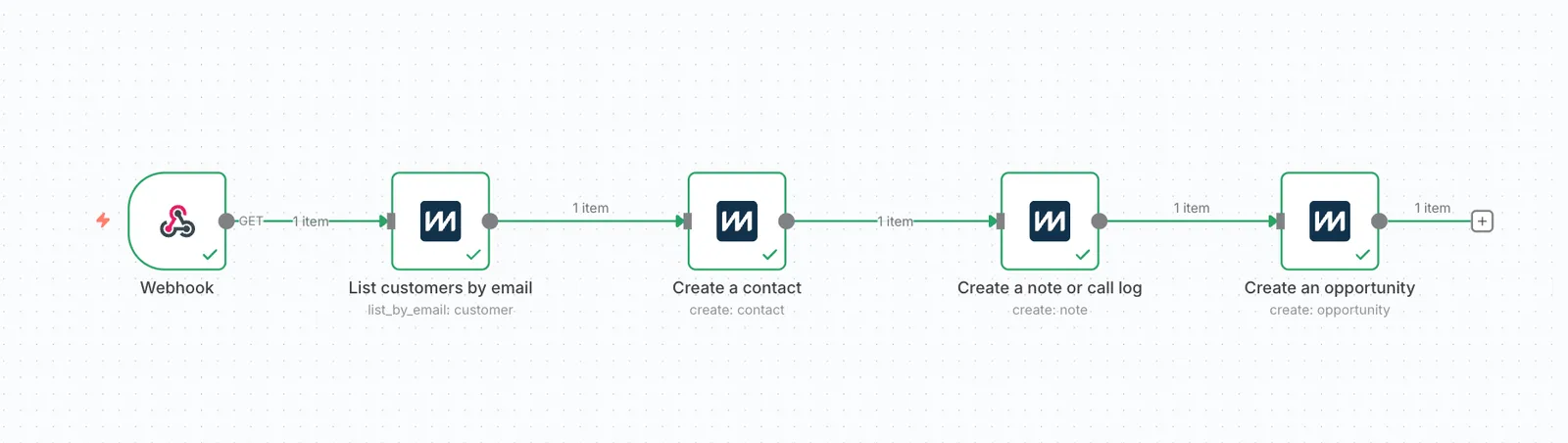
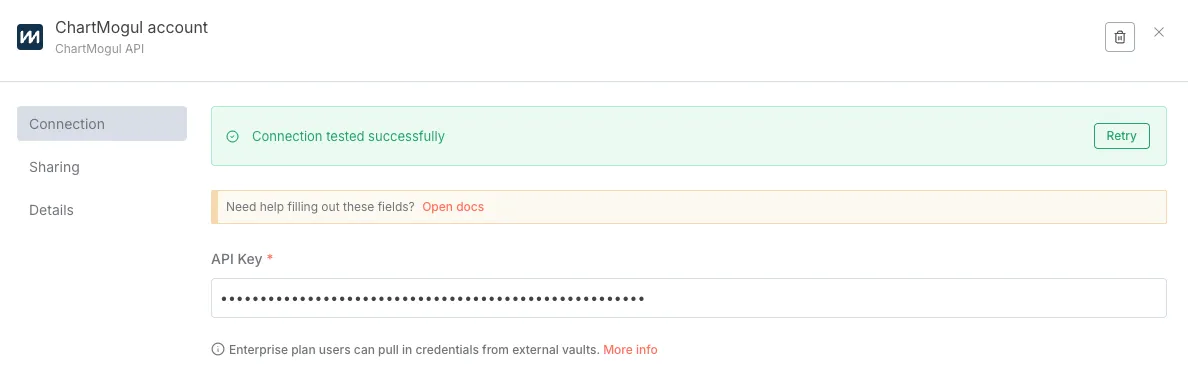
      <content type="html" xml:lang="en"><![CDATA[<p>We’re excited to share that ChartMogul is now available as a native integration in n8n, giving you a faster, easier, and more flexible way to build automated workflows around your customer data.</p><p>If you’re already using n8n to tie your tools together and automate key workflows, this new integration makes it simple to bring ChartMogul right into the mix. And if automation is new to you, it’s an easy, no-code way to start leveling up your revenue operations.</p><h2 id="what-s-new-with-this-integration">What’s new with this integration</h2><p>Before this integration, working with ChartMogul inside n8n required using manual API calls via the HTTP node or custom scripting. It worked, but it wasn’t always convenient, and it wasn’t simple enough for less technical users.</p><p>Now, with the native ChartMogul node, you get:</p><ul><li>A clean, no-code interface for major ChartMogul operations</li><li>Built-in authentication</li><li>A reliable API wrapper maintained by n8n</li><li>The ability to plug ChartMogul into any of n8n’s hundreds of connected apps</li></ul><h2 id="what-you-can-do-with-the-chartmogul-node">What you can do with the ChartMogul node</h2><p>The new connector exposes ChartMogul’s core API functions directly inside n8n, including the ability to:</p><ul><li>Create and update customers and contacts</li><li>Create and update opportunities, tasks, etc</li><li>Add notes and call logs to customer records</li><li>Manage sources</li></ul><p>Most of the API functionality is already available, and the remaining API functions (such as invoice handling etc) will be added in future iterations.</p><h2 id="example-automations-you-can-build">Example automations you can build</h2><p>Here are just a few possibilities:</p><p><strong>Sync new sign-ups instantly</strong></p><p>Send new customers from your signup form, product etc. into ChartMogul the moment they appear.</p><img src="/_notion/blog/.imports/asset-SCR-20260106-pmfx-l0T36UV6.webp" alt="" width="1270" height="382"><p><strong>Clean and enrich customer data</strong></p><p>Enrich your customer and contact records with data from external enrichment tools, product usage insights (like “last active”), or any other tools in your stack.</p><img src="/_notion/blog/.imports/asset-image-1-3ba79e5f4467-n5sBVLiJ.webp" alt="" width="752" height="450"><p><strong>Automate workflows</strong></p><p>Create an opportunity upon a certain action, add a task to a user and notify them on Slack, send third-party AI notetaker summaries to a customer record. The possibilities are endless.</p><img src="/_notion/blog/.imports/asset-SCR-20260106-pjjh-eRzGeN0N.webp" alt="" width="1600" height="452"><p>This is just scratching the surface. You can connect any tools you need and n8n gives you the building blocks to automate practically any revenue/growth operation.</p><h2 id="how-it-works-behind-the-scenes">How it works behind the scenes</h2><p>The integration is powered by an API wrapper maintained by our team. ChartMogul API endpoints are available as an action inside the ChartMogul node, complete with input fields, pagination handling, and structured outputs.</p><p>This means you get all the power of the ChartMogul API, without touching the API itself.</p><img src="/_notion/blog/.imports/asset-SCR-20260106-pjnw-C07VBK5y.webp" alt="" width="1188" height="392"><p>For deeper setup instructions or a step-by-step flow build, check out the <a href="https://help.chartmogul.com/article/312-integrating-chartmogul-with-n8n">help article</a>.</p><h2 id="what-s-next">What’s next</h2><p>In the next versions of the integration, you will see:</p><ul><li>The rest of the API endpoints available (more focused on subscription data integration)</li><li>Triggers to automate your workflows, e.g. trigger a workflow when a customer upgrades to celebrate in Slack, or on churn to immediately try a winback.</li></ul><h2 id="get-started">Get started</h2><p>You can start using the native ChartMogul node today. Just search for "ChartMogul" inside n8n and connect your API credentials.</p>]]></content>
    </entry>


    <entry>
      <title><![CDATA[AI in SaaS: What the Law Currently Says]]></title>
      <id>https://chartmogul.com/blog/ai-in-saas-what-the-law-currently-says/</id>
      <link href="https://chartmogul.com/blog/ai-in-saas-what-the-law-currently-says/"/>
      <published>2026-01-07T10:09:00+00:00</published>
      <updated>2026-01-07T10:09:00+00:00</updated>
      <summary><![CDATA[AI in SaaS operates under real legal constraints today, and this guide explains how GDPR and the EU AI Act apply to LLM-powered workflows handling personal data.]]></summary>
      
        <author><name>Brittany Heilmann</name></author>
      
      <content type="html" xml:lang="en"><![CDATA[<p>AI has moved from a side project to a core capability in SaaS products. Teams are integrating LLMs into customer support workflows, analytics pipelines, internal tools, and even core product features.</p><p>If you’re experimenting with AI but aren’t sure whether your current setup would hold up under customer scrutiny, procurement review, or regulatory questioning, you’re not alone. Many SaaS teams are moving fast with AI while still figuring out where the legal and practical boundaries actually are.</p><p>The legal framework still has catching up to do, but it’s already more developed than many people realize. In Europe, two cornerstone regulations matter most for SaaS companies today:</p><ul><li><strong>GDPR</strong> – governs how you process personal data (whether AI is involved or not)</li><li><strong>The EU AI Act</strong> – a newer, risk-based framework that governs AI systems themselves</li></ul><p>They’re complementary, not alternatives. If you’re using AI on personal data in or for the EU, you’ll often need to consider both.</p><p><em>Quick note:</em> <em>This is a high-level overview for informational purposes, not legal advice. Details depend on your specific use case and jurisdiction.</em></p><h2 id="1-gdpr-still-the-core-rulebook-for-ai-that-touches-personal-data">1. GDPR: Still the Core Rulebook for AI That Touches Personal Data</h2><p>GDPR predates modern generative AI, but it still applies to it. Authorities have made it clear that using AI presents another way of processing personal data, and GDPR principles apply.</p><p>If your AI workflows involve personal data, such as customer names, emails, identifiers, CRM exports, support tickets, call transcripts, or prompts containing user or employee information, then GDPR applies. What matters is the presence of personal data, not the technology used. For example, pasting a customer support thread into a public AI tool to “quickly summarize it” may feel harmless, but legally, that’s personal data being shared with a third party. From a GDPR perspective, it’s no different from sending the same information to an external vendor.</p><h3 id="key-gdpr-concepts-for-ai-use">Key GDPR concepts for AI use</h3><p>1. <strong>Lawful basis</strong></p><p>Identify and document a lawful basis whenever you process personal data with AI. For SaaS companies, this is often legitimate interest or contractual necessity.</p><p>2. <strong>Purpose limitation</strong></p><p>Personal data can only be used for specific, declared purposes. If an AI provider uses prompts for model training, that is a separate purpose that must be disclosed and justified.</p><p>3. <strong>Data minimization</strong></p><p>Send only the minimum necessary personal data into an AI system. This affects prompt design and whether public/free (versus enterprise) tools are appropriate.</p><p>4. <strong>Transparency</strong></p><p>Users must understand when AI is used and how their data is involved.</p><p>5. <strong>Vendor governance</strong></p><p>In many SaaS setups, your company is a controller, and the AI provider is a processor (or sub-processor) acting on your behalf, triggering DPA and security requirements.</p><p>6. <strong>International transfers</strong></p><p>If prompts or training data leave the EEA (e.g., to servers in the US), you need a valid transfer mechanism such as SCCs plus a transfer impact assessment.</p><p>7. <strong>Accountability</strong></p><p>You must be able to explain what data was used, for what purpose, with which vendor, under what safeguards, and for how long.</p><p><strong>In short:</strong> GDPR remains the backbone for AI that touches personal data. It doesn’t ban AI, but it does require that AI use be necessary, defined, minimized, and documented.</p><h2 id="2-eu-ai-act-a-risk-based-layer-on-top">2. EU AI Act: A Risk-Based Layer on Top</h2><p>While GDPR focuses on data protection, the EU AI Act focuses on AI systems themselves. It introduces a risk-based classification with four categories:</p><p><strong>1. Unacceptable risk (prohibited)</strong></p><p>AI practices that conflict with EU fundamental rights, such as certain types of social scoring or emotion-inference systems in workplaces, education, or law enforcement.</p><p><strong>2. High risk</strong></p><p>AI systems that significantly affect people’s health, safety, or fundamental rights, like automated credit assessments or certain AI systems that influence employment decisions. High-risk systems must meet strict requirements, including risk management, data quality, documentation, logging, and human oversight.</p><p><strong>3. Limited risk</strong></p><p>Common in SaaS, and can include chatbots, content-generating systems, and AI assistants. These systems interact with users, and the key concern is whether people realize they are engaging with AI. Transparency obligations apply.</p><p><strong>4. Minimal risk</strong></p><p>AI systems not covered above. No special obligations beyond existing laws, like GDPR.</p><p>Most current productivity and internal-assistance use cases in SaaS are unlikely to be high-risk, but many generative features and chatbots fall under limited risk, requiring transparency.</p><h3 id="roles-under-the-eu-ai-act">Roles under the EU AI Act</h3><p>The EU AI Act distinguishes between different actors, including:</p><ul><li><strong>Providers</strong> – organizations that develop an AI system or place it on the market</li><li><strong>Deployers</strong> – organizations that use an AI system operationally</li></ul><p>Most SaaS companies will be deployers of third-party systems. Some will be providers if they package AI into their product.</p><h3 id="penalties-why-ai-compliance-isn-t-optional">Penalties: Why AI compliance isn’t optional</h3><p>One reason the EU AI Act is getting so much attention is its sanctions, which in some cases are stricter than GDPR. For the most serious violations, such as using prohibited AI systems, fines can reach up to €35 million, or 7% of global annual turnover, whichever is higher. For comparison, GDPR fines max out at €20 million or 4%. Other breaches, such as failing to meet high-risk system requirements or providing incorrect information to regulators, can still lead to penalties of 3% or 1% of global annual turnover, respectively.</p><p>In practice, this means AI compliance isn’t just a legal formality. It’s a material business risk.</p><h2 id="3-where-gdpr-and-the-eu-ai-act-intersect-for-saas">3. Where GDPR and the EU AI Act Intersect for SaaS</h2><p>A simple way to think about these two regulations:</p><ul><li>GDPR governs what data you can process.</li><li>The EU AI Act governs how the AI system is designed, documented, and deployed.</li></ul><p>They overlap but do not duplicate each other.</p><p><strong>Practical intersections:</strong></p><ul><li>If an AI system uses personal data → GDPR applies</li><li>If the system is high-risk → EU AI Act obligations stack on top of GDPR</li><li>If an AI vendor logs prompts → purpose limitation applies under GDPR</li><li>If AI produces decisions that affect individuals → both frameworks apply</li><li>If your product includes AI features → transparency rules apply under the EU AI Act</li></ul><p>This is why SaaS companies increasingly need data governance <em>and</em> AI governance, even for seemingly simple features.</p><h2 id="4-what-this-means-for-saas-teams-right-now">4. What This Means for SaaS Teams Right Now</h2><p><strong>1. GDPR already applies</strong></p><p>Most AI use cases involve customer or employee data. Ensure you can map workflows to data inputs, legal bases, vendors, and safeguards.</p><p><strong>2. The EU AI Act adds a second layer</strong></p><p>Expect transparency obligations for many generative features and stricter requirements if you enter high-risk territory. Many deployer obligations start applying in 2026.</p><p><strong>3. Many SaaS companies are already “deployers”</strong></p><p>This brings duties around transparency, oversight, and monitoring, especially for user-facing AI features.</p><p><strong>4. Regulators are watching AI closely</strong></p><p>Authorities expect organizations to apply GDPR carefully to AI.</p><p><strong>5. You need a basic AI risk management process</strong></p><p>This doesn’t need to be overly complex, but enough to understand:</p><ul><li>what you're using AI for</li><li>what data goes into it</li><li>what could go wrong</li><li>what protections you have in place</li><li>how the AI might fail</li><li>where a human needs to stay in the loop</li></ul><p><strong>6. Vendor due diligence is non-negotiable</strong></p><p>Ask your AI vendors:</p><ul><li>Where is inference performed?</li><li>Do you train or retain prompts?</li><li>Who are your subprocessors?</li><li>What safeguards exist around model drift and updates?</li><li>Do you provide EU AI Act documentation for deployers?</li></ul><p><strong>7. Internal guidance is essential</strong></p><p>Uncontrolled employee use of public AI tools is already a significant GDPR risk.</p><h3 id="balancing-compliance-risk-and-real-world-business-needs">Balancing compliance, risk, and real-world business needs</h3><p>Every SaaS company faces the same tension:</p><p>How do we innovate quickly without creating unreasonable legal or operational risk?</p><p>A few principles will help you view compliance not as a stumbling block, but rather a way to build AI capabilities that scale:</p><ul><li><strong>Compliance creates trust.</strong> Enterprise buyers increasingly ask how AI features work, what data they touch, and what safeguards exist. Clear, or even proactive, answers create a competitive edge.</li><li><strong>Early structure prevents bigger problems.</strong> Simple habits, like clear AI-use rules, vetted vendors, and prompt redaction, can avoid costly redesigns, product delays, or customer objections.</li><li><strong>Predictability is the goal.</strong> AI risks aren’t only legal; they’re operational. Models change. Outputs drift. Compliance frameworks present the opportunity to build in documentation, monitoring, and controls to make AI use reliable.</li><li><strong>Don’t let perfection be the enemy of good.</strong> Start small with low-risk use cases, clear documentation, vendors with strong governance, and keeping personal data out of prompts whenever possible.</li></ul><p>Strong but lightweight AI governance will show your customers and prospects:</p><ul><li>you know what you’re doing</li><li>you’ve considered the risks</li><li>you won’t jeopardize their compliance</li><li>your AI features are an asset, not a liability</li></ul><p>And this becomes a genuine sales differentiator.</p><h2 id="5-the-bottom-line-ai-laws-aren-t-blocking-innovation-they-re-making-it-predictable">5. The Bottom Line: AI Laws Aren’t Blocking Innovation — They’re Making It Predictable</h2><p>Both GDPR and the EU AI Act share the same goal:</p><p>AI systems handling personal data must be explainable, accountable, and safe.</p><p>For SaaS companies, this boils down to:</p><ul><li>knowing what data goes where</li><li>having clear rules for how AI is used</li><li>documenting key decisions</li><li>choosing trustworthy vendors</li><li>being transparent with users</li></ul><p>These frameworks don’t prevent innovation. They create the conditions for trustworthy, reliable AI. If you can’t clearly explain how AI is used in your company products or workflows today, consider it a useful signal about where clarity is still needed.</p><img src="/_notion/blog/.imports/asset-brittany-XKwJWdQr.webp" alt="" width="230" height="230"><p><em>Brittany is Legal Counsel at ChartMogul, where she leads legal and compliance across the company. She has spent over a decade advising businesses on commercial law, with experience spanning labor and employment, contracts, and intellectual property across private practice and in-house roles.</em></p><p><em>At ChartMogul, Brittany supports safe, high-velocity growth by guiding SaaS and AI governance, go-to-market contracting, data protection, global compliance, and risk management. She is based in Germany.</em></p>]]></content>
    </entry>


    <entry>
      <title><![CDATA[Why it has never been easier or cheaper to build a high-accuracy SaaS attribution model]]></title>
      <id>https://chartmogul.com/blog/why-it-has-never-been-easier-or-cheaper-to-build-a-high-accuracy-saas-attribution-model/</id>
      <link href="https://chartmogul.com/blog/why-it-has-never-been-easier-or-cheaper-to-build-a-high-accuracy-saas-attribution-model/"/>
      <published>2025-11-19T14:21:00+00:00</published>
      <updated>2025-11-19T14:21:00+00:00</updated>
      <summary><![CDATA[Learn why advances in data tooling make building a high-accuracy SaaS attribution model easier and cheaper than ever, with a five-step approach to connect marketing spend to revenue.]]></summary>
      
        <author><name>Sara Archer</name></author>
      
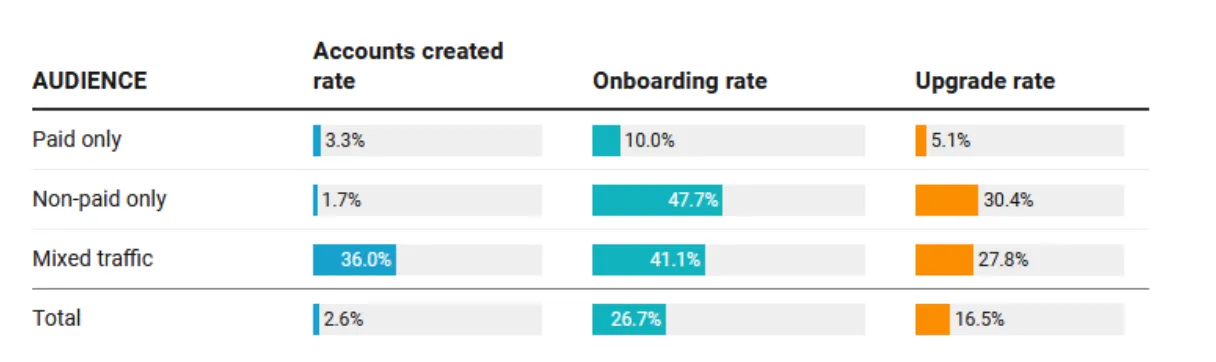
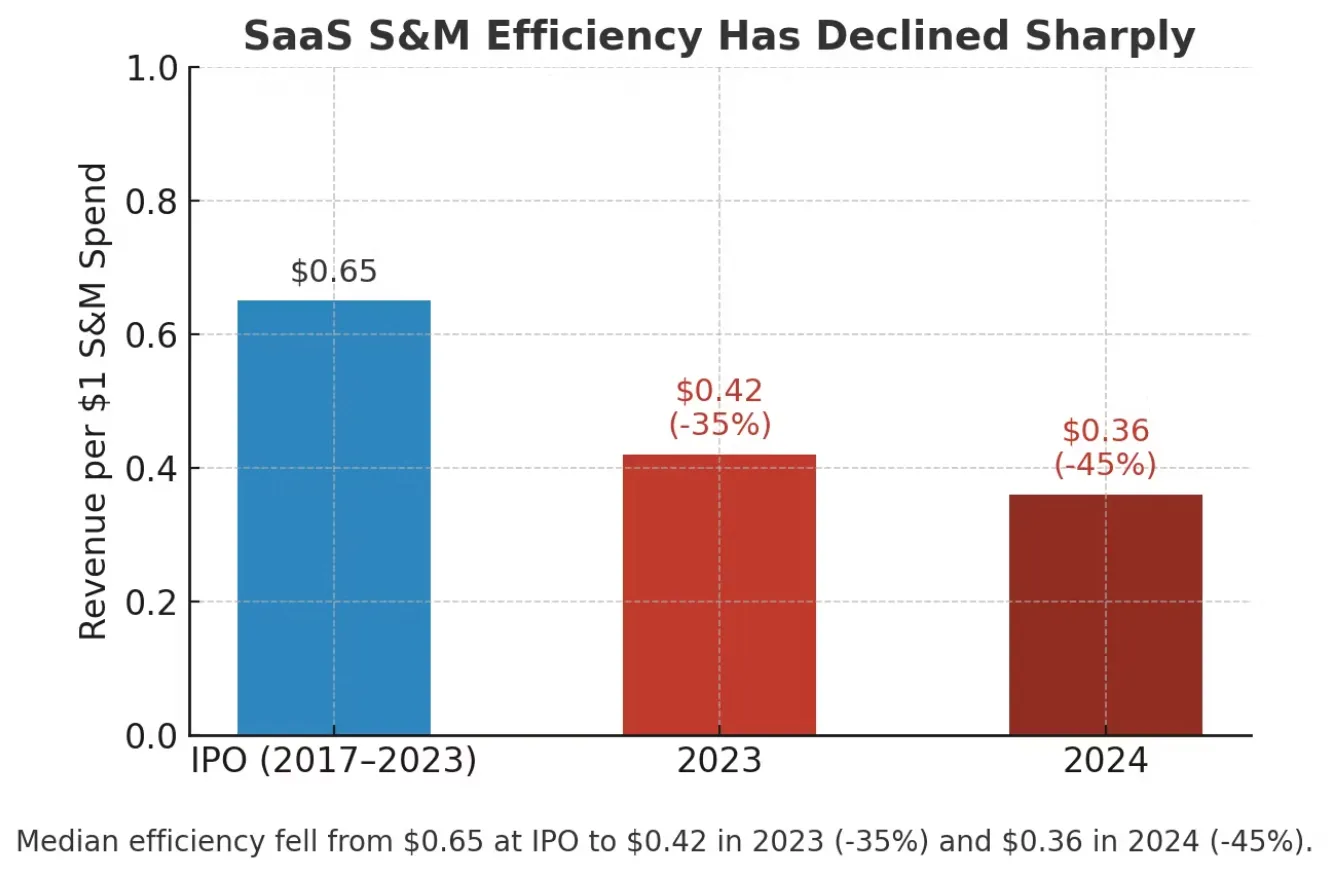
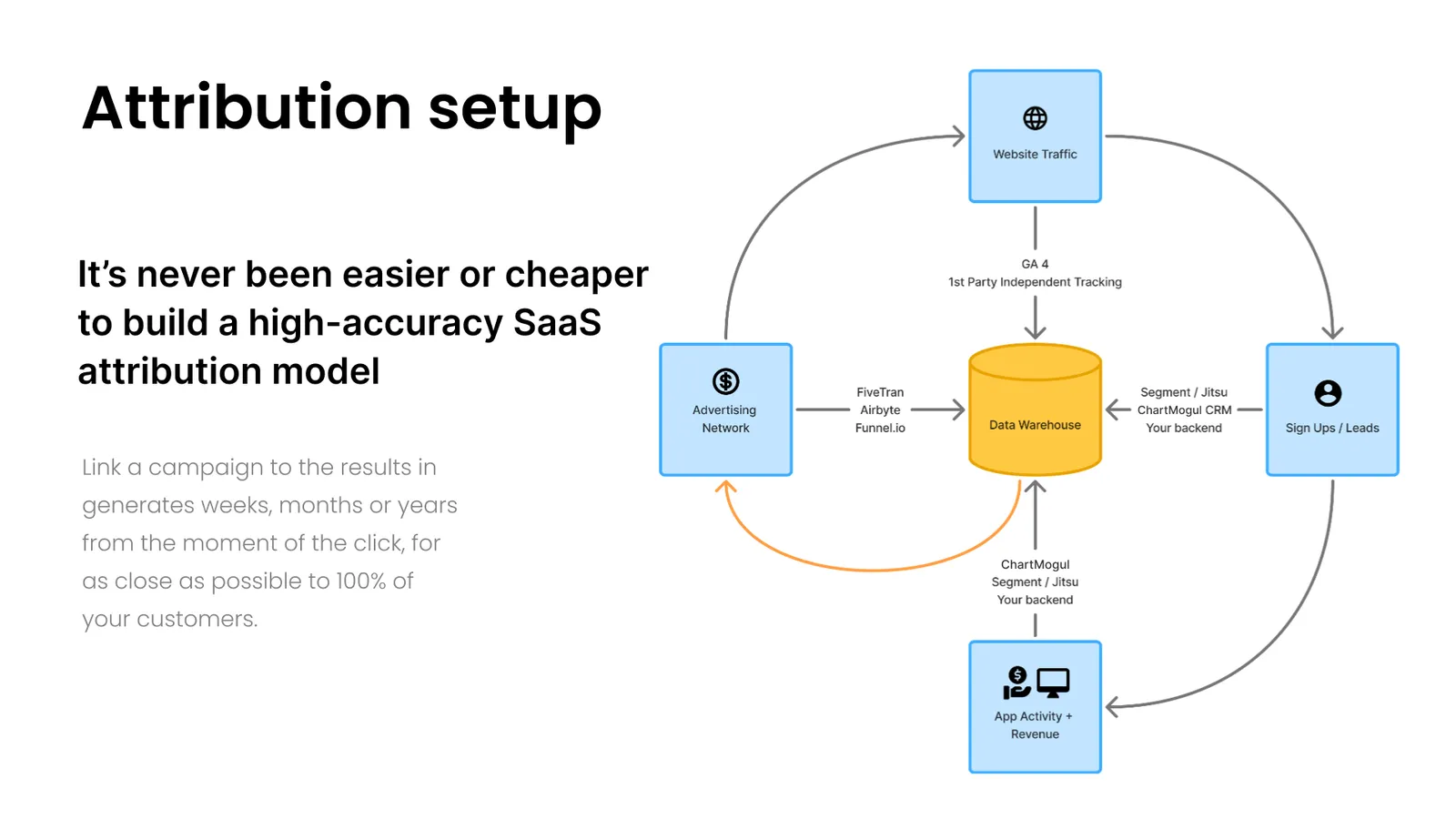
      <content type="html" xml:lang="en"><![CDATA[<p>Marketing attribution in SaaS has a reputation for being complex, unreliable, and expensive. Over the last fifteen years, the industry has focused heavily on pipeline performance marketing. Many teams have over-indexed on dashboards and reporting infrastructure designed to defend spend decisions. The result is countless hours spent debating whether first touch or last touch is the correct model instead of investing that same time into meaningful, creative top-of-funnel demand generation.</p><p>Founders and revenue leaders know they are spending real money on acquisition. They also know that proving which channels truly produce revenue is one of the hardest questions to answer.</p><p>Attribution today is not about chasing perfect precision. It is about using the tools you already have to create a high-quality data model that gives you clarity on how marketing spend turns into revenue.</p><p>In a recent workshop with our friends at <a href="https://www.innertrends.com/">InnerTrends</a>, <a href="https://www.linkedin.com/in/claudiumurariu/">Claudiu</a> and I landed on an exciting conclusion: <strong>It has never been easier or more affordable to build a high-accuracy attribution model for your SaaS business.</strong></p><p>This article explains why attribution has become more achievable, what has shifted in the data landscape, and offers step-by-step tactical guidance (just 5 steps!) about how you can finally feel confident about your marketing attribution strategy.</p><h2 id="the-old-attribution-model-was-never-designed-for-saas">The old attribution model was never designed for SaaS</h2><p>The earliest digital attribution models were built for e-commerce, not subscription businesses. They assumed a quick path: a click, a session, a purchase.</p><img src="/_notion/blog/.imports/asset-image-3-j2RRVtvP.webp" alt="" width="1146" height="412"><p>That world was simple. Conversions happened in a single session. Browsers allowed tracking scripts to run freely. UTMs solved most data needs. Ad platforms handled the rest.</p><p>SaaS looks nothing like that world. A buyer journey might span weeks or months. Multiple users influence a deal. Signups happen on one device and upgrades on another. PLG and LLM-driven product activity shapes revenue long before a human ever enters the sales process.</p><p>Take a moment to think about the modern SaaS buyer’s journey. Browsers block third-party cookies, consent banners suppress scripts, and users arrive with ad blockers and VPNs. And that is only the digital side. Products are discovered, researched, and recommended through Slack communities, WhatsApp messages, podcast mentions, YouTube interviews, and conversations around dinner tables.</p><p>It is no surprise that an increasing share of traffic shows up as Direct or Unknown.</p><p>The important shift is that attribution is not broken. The old model was simply designed for a world that no longer exists.</p><h2 id="precision-is-impossible-and-that-s-the-good-news">Precision is impossible and that’s the good news</h2><p>SaaS founders often feel pressure to produce exact attribution numbers. In reality, exact precision is impossible.</p><p>If someone hears about your product in a WhatsApp group, sees your brand mentioned in a Slack community, and signs up later from a laptop, no system can track that fully. The data will never be perfect.</p><p>What matters is consistency. If you can reliably track 60 to 75 percent of user journeys with clean, first-party data, patterns emerge that allow you to make strong, confident decisions.</p><blockquote>“People block tracking, scripts won’t load, random errors happen. Guess what? It doesn’t matter. Once you have verified your approach, have tested against something more robust like the server logs, and know that your results are consistent and accurate but only capture 70% of the leads, that’s fine.

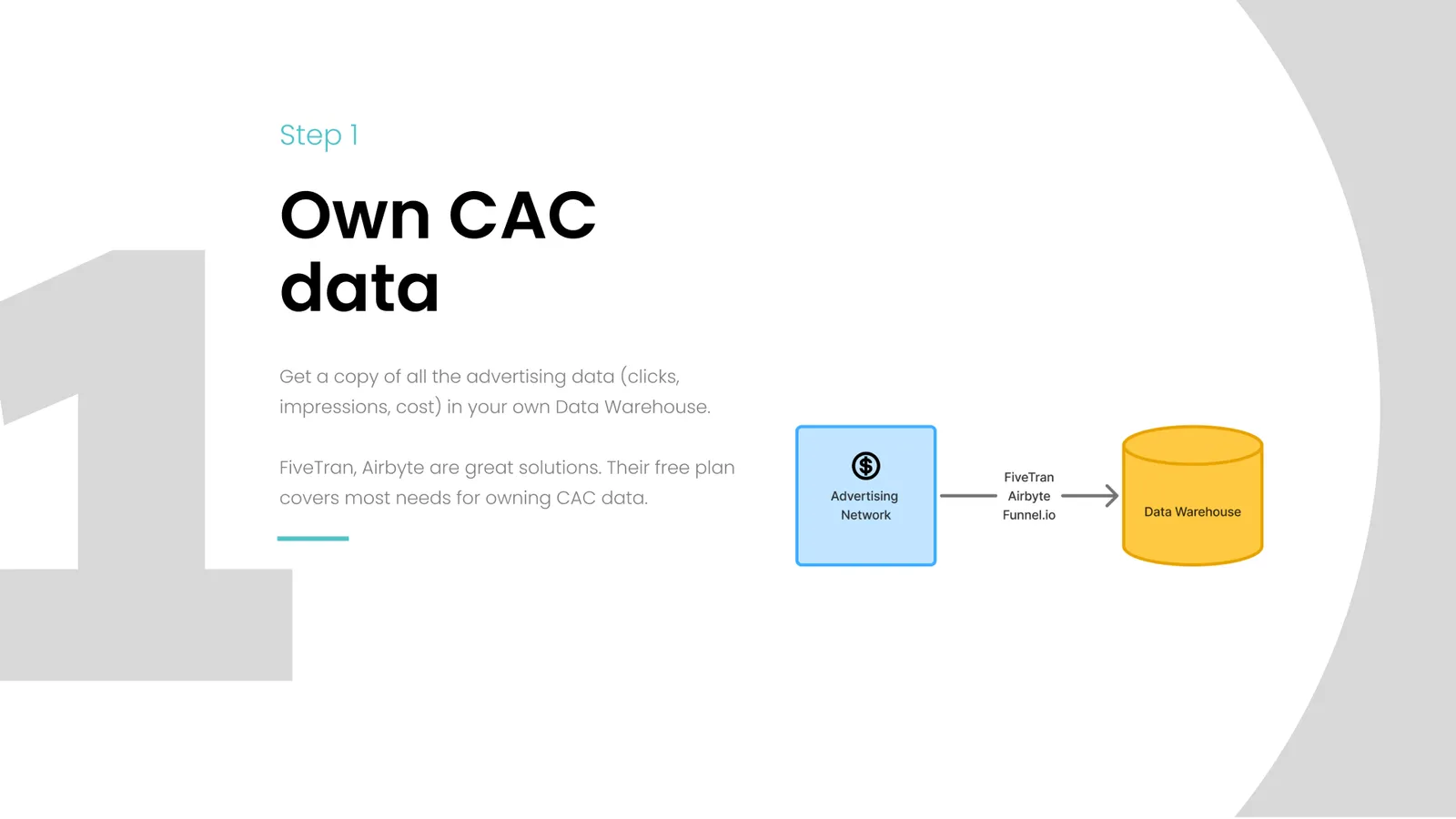
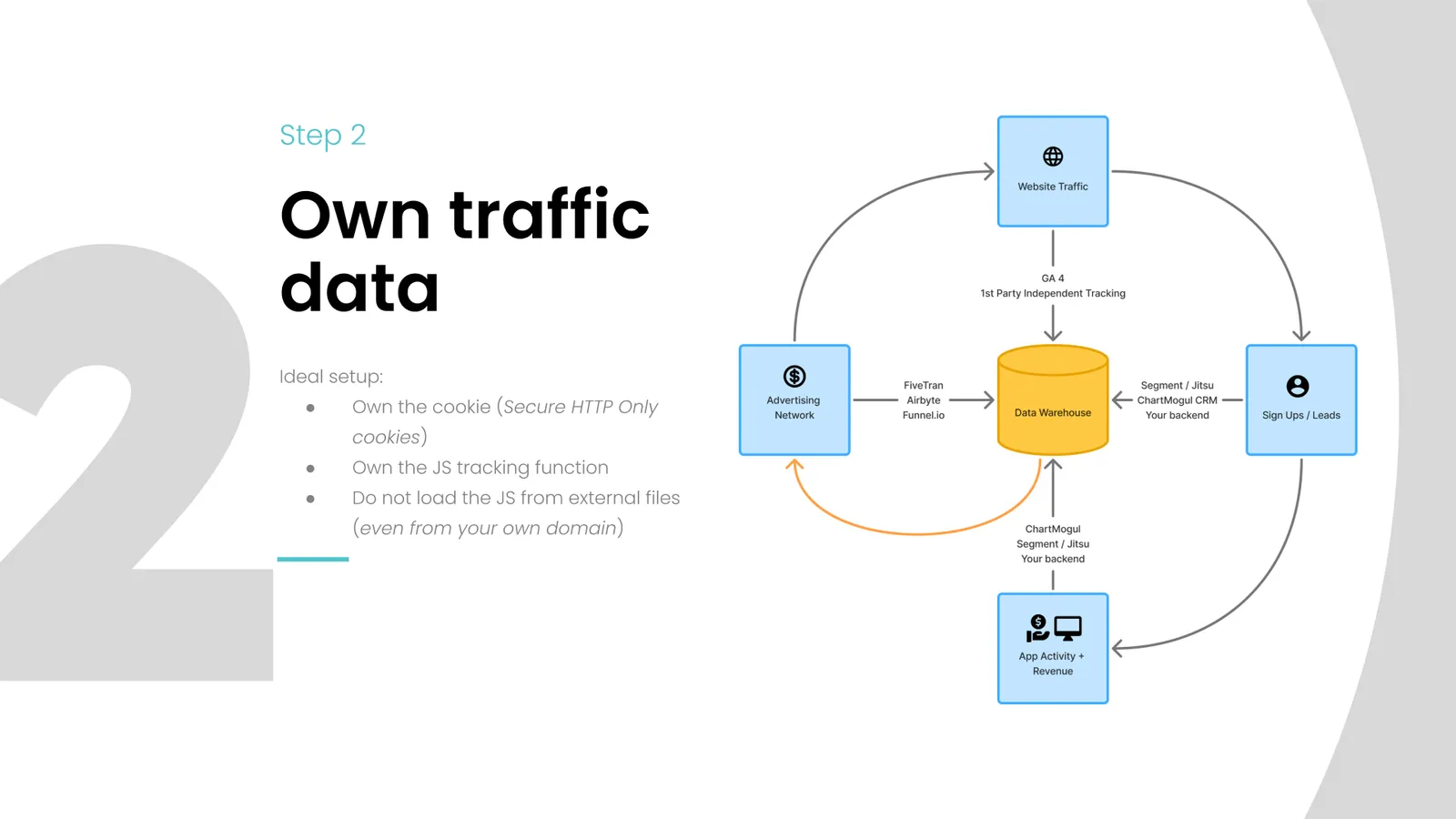
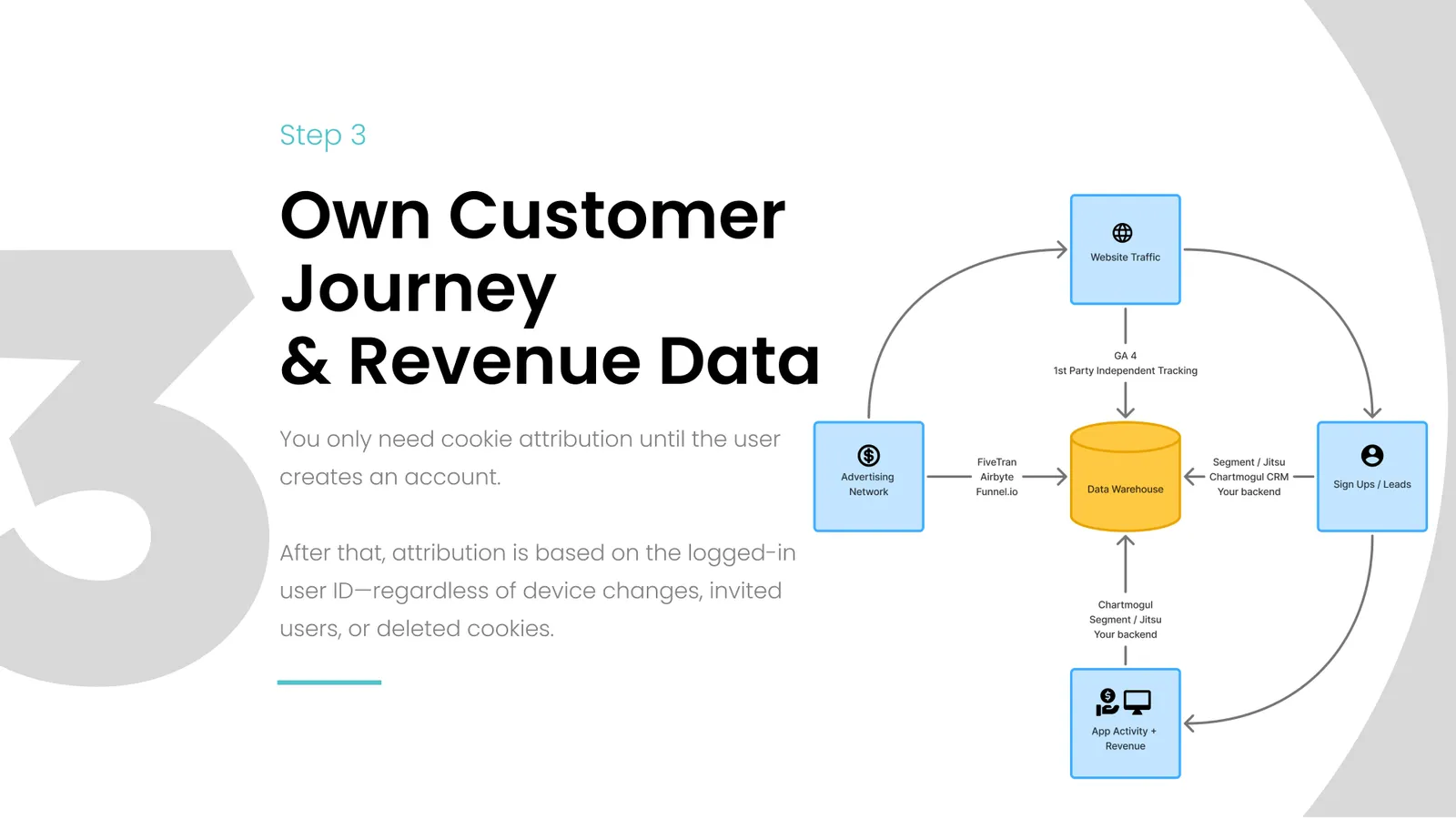
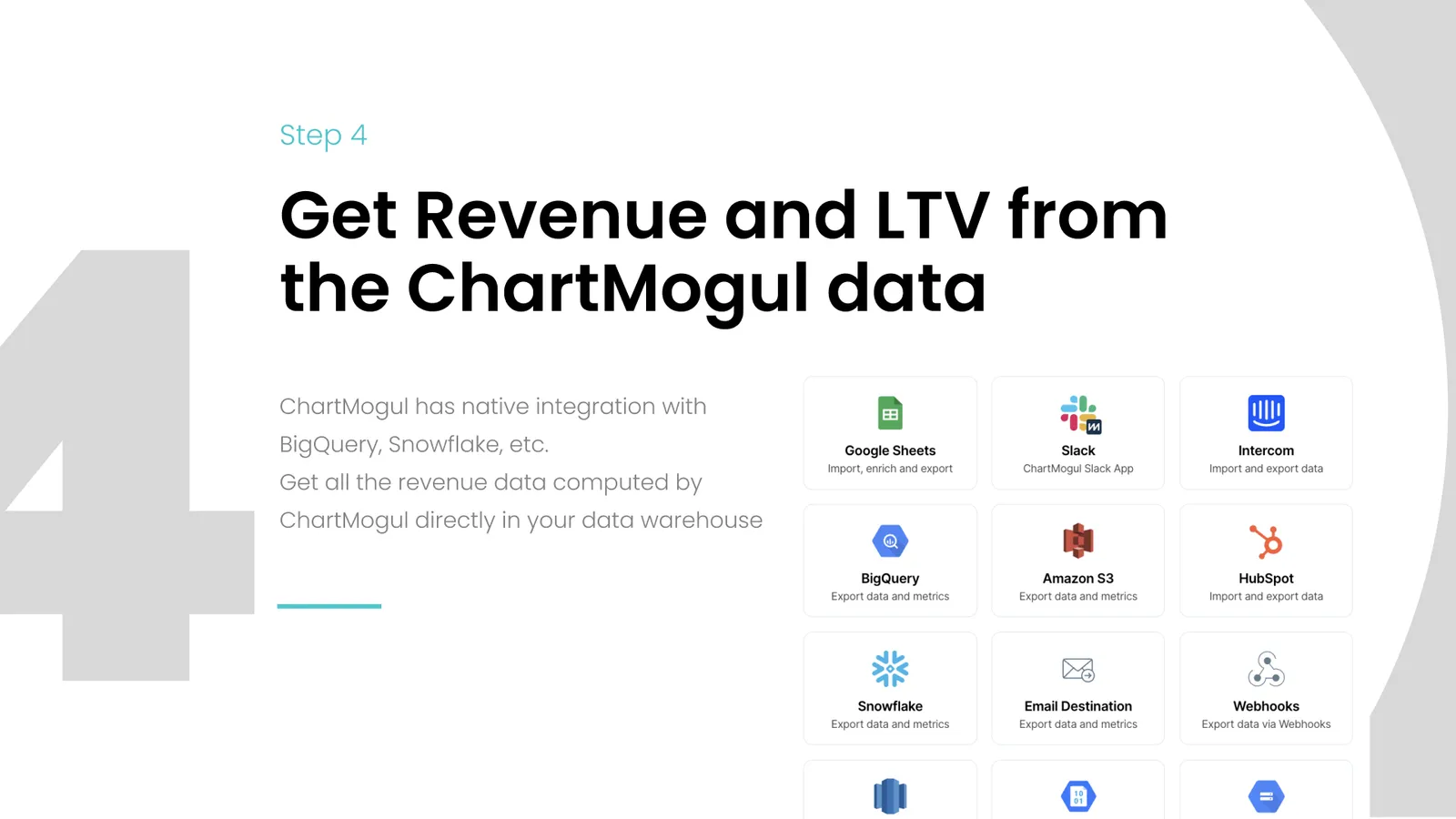
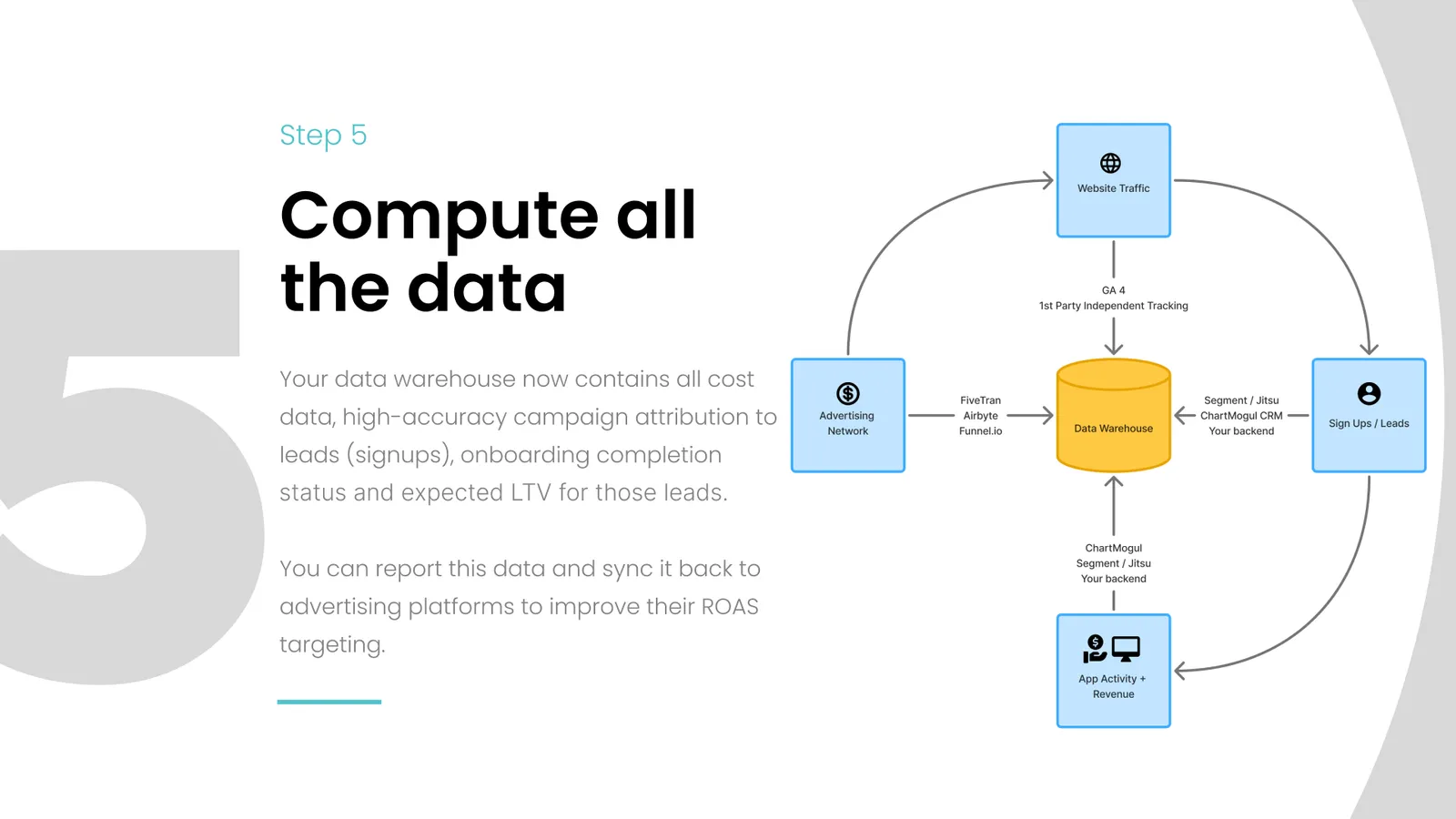
You now know that you are missing 30%. But you also know that you are comparing 2 campaigns on the same basis. So, your decision making is practically unaffected” — <a href="https://www.linkedin.com/in/thomasanastaselos/">Thomas Anastaselos</a>, Director of Revenue Operations and Data Analytics @ ChartMogul</blockquote><p>This is the mindset shift that unlocks modern attribution. You no longer need to chase the last 25 percent. You need a durable model that correctly interprets the majority.</p><h2 id="why-attribution-is-getting-easier-for-saas-companies">Why attribution is getting easier for SaaS companies</h2><p>Despite stricter privacy rules, attribution is becoming easier because control is moving back into the hands of SaaS teams.</p><p>Here is why.</p><h3 id="1-first-party-data-replaces-unreliable-third-party-tracking">1. First-party data replaces unreliable third-party tracking</h3><p>The most reliable attribution events happen at signup, login, and product interaction. These events are under your control, not the browser’s. When stored correctly, they become the backbone of your attribution model.</p><h3 id="2-data-warehouses-are-accessible-to-every-company">2. Data warehouses are accessible to every company</h3><p>Tools like Snowflake, BigQuery, and Postgres make it simple and inexpensive to centralize:</p><ul><li>UTMs</li><li>Click data</li><li>Signup events</li><li>Activation events</li><li>Trial-to-paid conversions</li><li>Subscription revenue</li></ul><p>Ten years ago, this required a complex data team. Today, most SaaS teams can set up the core infrastructure with minimal engineering support.</p><h3 id="3-identity-stitching-no-longer-depends-on-cookies">3. Identity stitching no longer depends on cookies</h3><p>Once a user signs up or logs in, you can associate their entire journey using your own identifiers. This works even if earlier touchpoints happened in a cookie-blocked environment.</p><h3 id="4-plg-data-creates-a-richer-attribution-story">4. PLG data creates a richer attribution story</h3><p>Product behavior is one of the strongest predictors of upgrade likelihood and lifetime value. When PLG data joins marketing data inside your warehouse, your attribution model becomes significantly more accurate.</p><p>All of this makes attribution more achievable for SaaS companies, not less.</p><h2 id="why-high-accuracy-attribution-matters-for-growth">Why high-accuracy attribution matters for growth</h2><p>Not all leads are created equal. A paid click might produce a signup, but the conversion and activation rates and therefore, the long-term value of that user can be dramatically different from someone who arrived through content, referral, or organic search.</p><p>Across many SaaS data sets, it is common to see:</p><ul><li>Organic-influenced signups activating at higher rates</li><li>Paid-only traffic producing lower retention</li><li>Specific campaigns generating long-tail expansion</li><li>Certain landing pages correlating with high LTV segments</li></ul><img src="/_notion/blog/.imports/asset-image-2-6XQMkOTZ.webp" alt="" width="1216" height="362"><p>This is why attribution is not just an analytics exercise, but rather a growth strategy.</p><h3 id="attribution-is-the-only-way-to-connect-channel-level-spend-to-customer-level-outcomes">Attribution is the only way to connect channel-level spend to customer-level outcomes.</h3><p>When founders understand:</p><ul><li>Which channels drive activation</li><li>Which campaigns produce high-LTV accounts</li><li>Which landing pages correlate with strong trial-to-paid conversion</li><li>Which audiences deliver retention and expansion</li></ul><p>They can allocate budget in ways that compound over time.</p><h2 id="a-real-world-example-when-lead-volume-misleads">A real-world example: when lead volume misleads</h2><p>A few years ago at ChartMogul, we experimented and invested heavily in a gated content strategy. From a surface-level marketing perspective, it was a success. Lead volume doubled. Dashboards looked healthy.</p><p>But revenue told <a href="https://chartmogul.com/blog/getting-started-with-marketing-attribution/">a different story</a>.</p><p>When we segmented by MRR contribution, free-trial-driven signups consistently produced far more revenue than gated content leads.</p><p>This is the danger of optimizing for vanity metrics like leads or sessions. Without full-funnel attribution, teams end up celebrating top-of-funnel volume that does not translate into meaningful revenue.</p><p>A modern attribution model forces the conversation to shift from lead quantity to revenue quality.</p><h2 id="rising-cac-makes-attribution-even-more-critical">Rising CAC makes attribution even more critical</h2><p>SaaS customer acquisition costs continue to climb. Sales and marketing efficiency is falling for many companies.</p><img src="/_notion/blog/.imports/asset-image-1-2mkylj0-.webp" alt="" width="1328" height="872"><p>Source: <a href="https://blossomstreetventures.medium.com/saas-s-m-spend-is-not-working-8070f8722d33">Blossom Street</a></p><p>Attribution gives you the visibility to identify which cohorts are worth pursuing and which are not. This is the foundation of strategic budget allocation.</p><h2 id="building-your-modern-saas-attribution-model">Building your modern SaaS attribution model</h2><p>A practical model does not require a large data team. It requires a data warehouse-first approach and a simple, consistent framework. Claudiu, from InnerTrends, explains the key steps.</p><h3 id="1-own-your-cac-data">1. Own your CAC data</h3><p>Start by owning the core advertising data in your own data warehouse.</p><ul><li>Collect clicks, impressions, and cost from all ad platforms.</li><li>Use tools like Fivetran or Airbyte to pull this into BigQuery, Snowflake, or similar. In many cases, their free plans are enough to cover early attribution needs.</li></ul><p>Once you own CAC data, you are no longer dependent on whatever reporting your ad platforms choose to expose.</p><h3 id="2-own-your-traffic-data-cookie-and-tracking">2. Own your traffic data: cookie and tracking</h3><p>Next, take control of how traffic is tracked on your site. Here’s our take on an ideal set-up:</p><ul><li>Use secure, HTTP-only first-party cookies.</li><li>Own the JavaScript tracking function.</li><li>Avoid loading that tracking code from external files, even from your own domain.</li></ul><p>This matters because:</p><ul><li>Your cookies cannot be read or corrupted by external tracking libraries.</li><li>You decide exactly who can use the cookie values and how.</li><li>You reduce your exposure to ad blockers that look for known tracking patterns.</li></ul><p>Ad blockers, browser settings, and mobile devices increasingly block scripts from Google Tag Manager, Google Analytics, Google Ads, and Meta Ads. That is why most ad platforms now recommend using server side Conversions APIs.</p><p>Tracking codes are often detected and blocked based on URL patterns and script signatures. When you host the tracking logic yourself, you break those patterns.</p><p>For example:</p><ul><li>ChartMogul uses Jitsu and serves tracking code from our own servers via a proxy implementation.</li><li>InnerTrends uses first-party, independent, inline tracking without relying on external tracking scripts.</li></ul><h3 id="3-own-the-customer-journey-and-revenue-events">3. Own the customer journey and revenue events</h3><p>Cookie based attribution is only required until the user creates an account. After signup, you can switch to a much more reliable key: the logged in user ID.</p><p>Once a user is logged in:</p><ul><li>You can track their journey across devices</li><li>You can follow invited teammates inside an account</li><li>You are no longer vulnerable to cookie deletion for attribution continuity</li></ul><p>From this point, attribution is tied to the user and the account, not to a fragile browser cookie.</p><h3 id="4-bring-in-subscription-revenue-and-ltv-data">4. Bring in subscription revenue and LTV data</h3><p>Next, connect your subscription analytics platform so revenue is part of the same picture. This gives you the financial side of the attribution equation.</p><p>With ChartMogul, for example, you can:</p><ul><li>Use native integrations with BigQuery, Snowflake, and other warehouses.</li><li>Sync all subscription revenue events that ChartMogul computes into your data warehouse.</li><li>Access MRR, churn, expansion, and LTV at the customer and cohort level.</li></ul><h3 id="5-compute-and-activate-your-model">5. Compute and activate your model</h3><p>At this point, your data warehouse contains:</p><ul><li>Cost and impression data from ad platforms</li><li>High accuracy campaign attribution to signups</li><li>Onboarding and product activation status</li><li>Revenue and LTV for each customer and cohort</li></ul><p><strong>See all 5 steps here:</strong></p><img src="/_notion/blog/.imports/asset-image-JkRl1SqA.webp" alt="" width="1600" height="900"><img src="/_notion/blog/.imports/asset-image-G381i-vm.webp" alt="" width="1600" height="900"><img src="/_notion/blog/.imports/asset-image-YVZvAvVQ.webp" alt="" width="1600" height="900"><img src="/_notion/blog/.imports/asset-image-wmyuCfSu.webp" alt="" width="1600" height="900"><img src="/_notion/blog/.imports/asset-image-2Ajg6211.webp" alt="" width="1600" height="900"><img src="/_notion/blog/.imports/asset-image-Z0s1oPSg.webp" alt="" width="1600" height="900"><p>You can now:</p><ul><li>Build attribution models that tie spend to LTV and payback.</li><li>Report performance by channel, campaign, landing page, or audience.</li><li>Push cleaned conversion and value signals back to ad platforms to improve their ROAS targeting.</li></ul><p>This is how you move from debating first touch versus last touch to owning a practical, high accuracy attribution model that actually guides budget decisions.</p><h2 id="final-takeaway">Final takeaway</h2><p>You do not need perfect tracking or enterprise marketing automation.</p><p>You need a model built on first-party data, enriched with product usage, connected to revenue, and fully owned by your team.</p><p>Modern data tools finally make this possible for SaaS businesses of all sizes.</p>]]></content>
    </entry>


    <entry>
      <title><![CDATA[Fast forever: how to keep shipping at speed as your SaaS company grows]]></title>
      <id>https://chartmogul.com/blog/fast-forever-how-to-keep-shipping-at-speed-as-your-saas-company-grows/</id>
      <link href="https://chartmogul.com/blog/fast-forever-how-to-keep-shipping-at-speed-as-your-saas-company-grows/"/>
      <published>2025-10-30T15:00:00+00:00</published>
      <updated>2025-10-30T15:00:00+00:00</updated>
      <summary><![CDATA[Learn how ChartMogul rebuilt its engineering velocity by restructuring around autonomous swimlane teams that own their domain end-to-end as the company scaled.]]></summary>
      
        <author><name>Nick Franklin</name></author>
      
      <content type="html" xml:lang="en"><![CDATA[<p>We’ve been building ChartMogul for more than a decade. I’m a product-focused generalist and a solo founder with a deep love for design and detail. Over the years, I’ve come to believe that a company’s <em>rate of innovation</em> is both a huge motivator for the team and a lasting competitive moat. It fuels momentum and keeps people engaged and excited.</p><img src="/_notion/blog/.imports/asset-Screenshot-2025-10-30-at-14.18.50-jqgqJBZM.webp" alt="" width="1098" height="554"><p>In Silicon Valley, speed often comes from massive funding rounds and all-consuming work cultures. But what if you’re a solid, product-focused B2B SaaS company in Europe without that kind of hypergrowth pressure? You still need to move fast. You just have to find another way.</p><p>This is the story of how we built that rhythm, lost it, and got it back again. This content was originally presented at <a href="https://www.arrtist.net/">ARRtist Summit</a> in Berlin.</p><h2 id="early-momentum">Early momentum</h2><p>Back in 2014 and 2015, things were simple. We raised a bit of money, shipped fast, and found customers who loved what we were building. With just a handful of engineers, progress was visible every week. Commits were flying, and every release felt like a win.</p><h2 id="when-speed-slipped-away">When speed slipped away</h2><p>As the product grew, so did the complexity. Fixing one part of the app broke something else. Our 2016 experiment with microservices only made things worse.</p><p>The backend became tangled. Only the frontend team was moving at a steady pace. Frustration built up, engineers left, and productivity stalled. It’s hard to tell who’s doing great work when no one can make visible progress.</p><img src="/_notion/blog/.imports/asset-Screenshot-2025-10-30-at-14.19.27-129a4185cfe5-kneqOivv.webp" alt="" width="1024" height="473"><p>Around that time, I spoke with another founder who explained how his company used <em>swimlanes</em> to organize engineering. Each team owned its area end to end, able to ship independently without blocking others. It was a lightbulb moment.</p><p>That wasn’t how we were set up at all. Realizing it was a bit crushing because it meant we’d have to rebuild large parts of what we’d already built. But it also gave me clarity on what needed to change.</p><p>The good news was that customers still loved the product, and revenue kept growing. That gave us time to fix the foundation before it was too late.</p><h2 id="rebuilding-the-machine">Rebuilding the machine</h2><p>In 2018, on a long flight to Seoul, I started sketching what a clean, fast, scalable ChartMogul architecture might look like. It meant creating clear boundaries between integrations, pipelines, analytics, and frontend layers — our own version of swimlanes.</p><p>From 2019 onward, we got to work. We rewrote almost everything:</p><ul><li>Rebuilt every integration</li><li>Moved the frontend from Backbone to Vue</li><li>Folded microservices back into the monolith</li><li>Migrated from DigitalOcean to AWS</li><li>Switched the query engine from PostgreSQL to ClickHouse</li></ul><p>Here's what that looked like:</p><img src="/_notion/blog/.imports/asset-Screenshot-2025-10-30-at-14.20.54-ec5301e11dbe-r_BdsrEW.webp" alt="" width="1024" height="432"><p>It took years, and it wasn’t easy. But the payoff was worth it. Today our codebase is cleaner, our engineers are happier, and we’re shipping faster than ever.</p><h2 id="lessons-in-building-fast">Lessons in building fast</h2><h3 id="1-architecture-comes-first">1. Architecture Comes First</h3><p>Good architecture matters more than team size. Hiring alone won’t fix a messy codebase. And less really is more. If your foundation is clean, everything else moves faster.</p><h3 id="2-run-it-like-a-sports-team">2. Run It Like a Sports Team</h3><p>Burnout doesn’t come from hard work. It comes from working without progress. Engineers want to build and ship. That’s what keeps them energized.</p><p>A few principles I’ve learned along the way:</p><ul><li>Attitude beats experience</li><li>Competence is everything</li><li>Managing out weak performers isn’t optional</li></ul><p>Steve Jobs once said the best managers are “experts leading experts.” I agree. At ChartMogul, everyone in engineering writes code, from the VP down.</p><h3 id="3-stay-close-to-the-work">3. Stay Close to the Work</h3><p>Early on, I thought my job was to stay out of the way of the experts. That was a mistake.</p><p>If you’re building a software company, you have to be inside the software. Learn how everything works. Spend time with the engineers, even when it’s tiring. People come and go, but you’re the constant. The founder’s energy and product perspective belong inside the technical conversation.</p><h3 id="4-keep-process-light">4. Keep Process Light</h3><p>Process helps, but too much of it slows you down. Don’t over-optimize how you work at the expense of actually building.</p><p>One simple habit that helps us: design features a few months before we implement them. It gives space for feedback, iteration, and better decisions.</p><p>Our design-to-build flow looks like this:</p><img src="/_notion/blog/.imports/asset-engineering_flow-Ocxwp9UI.webp" alt="" width="1600" height="900"><ol><li>Identify a need or opportunity</li><li>Product creates a design and collects feedback</li><li>Engineering reviews and plans implementation</li><li>Build, test, and ship</li></ol><p>Sometimes there’s a pause between stages, and that’s fine. The key is steady flow, not constant motion.</p><h2 id="fast-forever">Fast forever</h2><p>After all this, three lessons stand out:</p><ol><li>Architecture beats headcount. Plan it carefully.</li><li>Experts should lead experts. Avoid “professional managers.”</li><li>Momentum creates motivation. Protect it at all costs.</li></ol><p>We made every mistake in the book but kept going. Ten years later, we’re building faster than ever.</p>]]></content>
    </entry>


    <entry>
      <title><![CDATA[Enhanced support for tracking free trials and freemium subscriptions in ChartMogul]]></title>
      <id>https://chartmogul.com/blog/enhanced-support-for-tracking-free-trials-and-freemium-subscriptions-in-chartmogul/</id>
      <link href="https://chartmogul.com/blog/enhanced-support-for-tracking-free-trials-and-freemium-subscriptions-in-chartmogul/"/>
      <published>2025-10-16T08:31:00+00:00</published>
      <updated>2025-10-16T08:31:00+00:00</updated>
      <summary><![CDATA[ChartMogul now lets SaaS teams track free trials and freemium subscriptions with the same depth as paid plans to better understand conversion timing and revenue impact.]]></summary>
      
        <author><name>Nick Franklin</name></author>
      
      <content type="html" xml:lang="en"><![CDATA[<p>SaaS companies have long relied on free trials and freemium tiers to reduce adoption friction and grow faster. They are powerful strategies that allow users to experience value before making a purchase. But until now, it has been difficult to track and analyze these free subscriptions in ChartMogul with the same precision as paid subscriptions. Today we’re introducing major improvements to ChartMogul in an effort to help you build better monetization strategies.</p><p>We are excited to announce support for free subscriptions and free trials with plans. This new capability gives you the full picture of how free trials and free users behave, when they convert, and how they impact your recurring revenue.</p><h2 id="why-this-matters">Why this matters</h2><p>For years, customers have asked us to improve free trial tracking and introduce support for freemium reporting. Hundreds of requests have been made for the ability to slice free trial data by plan, and have visibility into free subscribers. These requests all point to the same challenge: without the full picture, it is hard to understand the role free users play in your business.</p><p>Free users often form the top of your funnel. They test features, explore value, and become strong candidates for conversion. By capturing and reporting on them directly in ChartMogul, you can now measure their impact and refine your growth strategy.</p><blockquote>“Being able to understand our free trial conversion rate by product is extremely important to us and directly informs key business decisions. ChartMogul implementing this feature was huge for us - it gives us a much clearer picture of what’s happening with our users, the quality of our free trial experience, and helps us quickly pinpoint any issues. It also lets us compare trial behavior versus direct purchase, which has been super helpful for a variety of reasons. As a company that loves to move quickly and test many things, we are very glad to have this in ChartMogul.” – Spencer Rowley, Growth Product Manager @ Topaz Labs</blockquote><h2 id="what-s-new">What’s new</h2><p>Here is what you can expect with this release:</p><p><strong>Free trials and free subscriptions with plan data</strong>Free trials and free subscriptions now appear in the subscriptions table on customer profiles, with clear statuses such as active, expired, and cancelled. Subscription history also records free trial and free subscription activities, giving you a complete lifecycle view.</p><img src="/_notion/blog/.imports/asset-image-5-dSL6u5NM.webp" alt="" width="1504" height="732"><p><strong>New and updated charts</strong>Two new reports, <a href="https://app.chartmogul.com/#/reports/charts/all-subscribers?start=2024-10-17&end=2025-10-16&interval=month&type=line&compare=true&stacked=false"><em>All Subscribers</em></a> and <a href="https://app.chartmogul.com/#/reports/charts/all-subscriptions?start=2024-10-17&end=2025-10-16&interval=month&type=line&compare=true&stacked=false"><em>All Subscriptions</em></a>, let you track both free and paid users together. See churn for all subscribers who cancel their subscription(s) in a given period for both paid and free subscribers with the new <a href="https://app.chartmogul.com/#/reports/charts/customer-churn?start=2024-10-17&end=2025-10-16&interval=month&type=line&compare=true&stacked=false"><em>All Subscriber Churn Rate</em></a>. Focus only on paid with the <a href="https://app.chartmogul.com/#/reports/charts/paid-subscriber-churn?start=2024-10-17&end=2025-10-16&interval=month&type=line&compare=true&stacked=false"><em>Paid Subscriber Churn Rate.</em></a></p><p>Existing charts like <em>Subscribers</em> and <em>Subscriptions</em> are now renamed <em>Paid Subscribers</em> and <em>Paid Subscriptions</em> for clarity.</p><img src="/_notion/blog/.imports/asset-image-f754-uwt.webp" alt="" width="1600" height="889"><p>The <em>Trial-to-Paid Conversions</em> report has been improved, and a new <em>Trial-to-Free-or-Paid Conversions</em> report has been added. You can filter trials by plan, compare conversion performance, and get a more accurate understanding of funnel performance.</p><blockquote>Trials are absolutely critical to our business, so being able to track their performance in ChartMogul is a game-changer. We finally see the complete picture of what's happening during that make-or-break period, which means we can make smarter decisions about both our product roadmap and business strategy. – Brenna Loury, CRO @ Doist</blockquote><p><a href="https://help.chartmogul.com/article/305-chart-trial-to-free-or-paid-conversions">Read</a> more about that here.</p><p><strong>Better data modeling</strong>Free trials and subscriptions are fully integrated into your reporting. Stripe and Recurly are supported out of the box, and conversions from trials to free or paid plans are linked for clean lifecycle tracking. This means you can answer questions such as:</p><ul><li>How many paid customers started as free subscribers?</li><li>How many paying customers downgraded to free plans?</li><li>What is the real conversion rate for specific trial plans?</li><li>How fast are my freemium plans growing vs my paid plans?</li></ul><h2 id="benefits-for-you">Benefits for you</h2><p>With support for free subscriptions and free trials with plans, you can:</p><ul><li>Get a complete picture of trial-to-paid (or freemium) conversions</li><li>Segment trials by plan to see which products get more trials, and which convert better than others</li><li>See how many customers you’re gaining from free-to-paid upgrades, or how many you’re losing from paid-to-free downgrades</li><li>Report on your freemium subscribers separately from your paying subscribers</li></ul><p>This feature removes guesswork and provides reliable data for every stage of the subscriber journey. This feature is available to new accounts today. For existing customers, rollout will begin in October 2025 alongside various other improvements that are tied to this release.</p><h2 id="get-started">Get started</h2><p>You do not need to change anything to benefit from these improvements if you are using Stripe or Recurly to track free trials or free subscriptions. Free trials and subscriptions will begin appearing automatically in your account once the feature is enabled on your account.</p><p>To learn more, visit our <a href="https://help.chartmogul.com/">help center</a> or contact our support team. We would love to hear your feedback as you start exploring these new capabilities.</p>]]></content>
    </entry>


    <entry>
      <title><![CDATA[Model your SaaS growth with Scenarios]]></title>
      <id>https://chartmogul.com/blog/model-your-saas-growth-with-scenarios/</id>
      <link href="https://chartmogul.com/blog/model-your-saas-growth-with-scenarios/"/>
      <published>2025-08-12T11:56:00+00:00</published>
      <updated>2025-08-12T11:56:00+00:00</updated>
      <summary><![CDATA[What if you reduced churn by 20%? Raised prices 10%? Doubled trials? With Scenarios, you can see how decisions might impact your business.]]></summary>
      
        <author><name>Nick Franklin</name></author>
      
      <content type="html" xml:lang="en"><![CDATA[<p>What would happen if you reduced churn by 20%? Raised prices by 10%? Doubled your free trial volume? With ChartMogul’s new Scenarios feature, you can explore how key business decisions might impact ARR and subscriber count.</p><h2 id="what-are-scenarios">What are Scenarios?</h2><p>SaaS founders and revenue leaders are constantly thinking <em>"what if?"</em></p><p>What if we reduce churn by 2%?</p><p>What if we raise prices?</p><p>What if we double down on expansion revenue?</p><p>There are endless levers you <em>could</em> pull… but one of the hardest parts of the job is figuring out which ones will actually move the needle.</p><p>That’s where Scenarios comes in. It lets you model how changes in churn, pricing, acquisition, and more could impact your <strong>future ARR</strong> and <strong>subscriber count</strong>, using your recent performance as the foundation.</p><p>Whether you're pressure-testing growth plans or aligning your team around what's possible, Scenarios helps you model your SaaS growth.</p><youtube-video videoid="Tdc5EDoi4gQ" width="1920" height="1080"></youtube-video><h3 id="here-are-a-few-scenarios-you-can-try">Here are a few Scenarios you can try:</h3><ul><li>You're considering a price increase and want to see its potential impact on ARR over the next 12 months.</li><li>You’re focused on specific churn improvements and want to understand how a 1-point reduction might help you hit this year’s ARR target.</li><li>You’re reworking onboarding and want to explore how an improvement in conversion might look.</li></ul><h2 id="how-to-model-your-first-scenario">How to model your first Scenario</h2><p>To get started, head to <a href="https://app.chartmogul.com/#/scenarios">Scenarios</a> in your ChartMogul account.</p><p>1. Choose your baseline</p><p>Scenarios are based on your historical performance, so to start, select whether to base your projection on the last 3, 6, or 9 months of performance.</p><p>2. Add your ‘What if…’ conditions</p><p>Choose from a set of common SaaS growth levers:</p><ul><li>New subscriber volume</li><li>Pricing changes</li><li>Customer churn rate</li></ul><p>For each lever, define the change you want to simulate:</p><ul><li>Increase or decrease by a specific percentage</li><li>Apply the change immediately or over a defined period of time</li></ul><p>You can mix and match multiple conditions to build out more complex scenarios.</p><p>3. Review your projections</p><p>The chart updates dynamically as you adjust inputs. The gray dashed line shows your scenario-based projection. The blue dashed line shows the baseline, based on historical averages</p><p>Use Scenarios to visualize potential outcomes month by month, quarter by quarter, or year by year.</p><h2 id="model-your-saas-growth-today">Model your SaaS growth today</h2><p>Whether you're pressure-testing pricing changes, planning acquisition spend, or modeling retention improvements, Scenarios help you explore what’s possible and rally the team around ambitious targets.</p><p><a href="https://app.chartmogul.com/#/scenarios">Try it out now.</a></p>]]></content>
    </entry>


</feed>