
SaaS 선구자의 귀환
Buffer는 크리에이터와 창업가, 소규모 비즈니스를 위한 소셜 미디어 툴킷입니다. 지속 가능한 성장과 투명한 급여, 원격 근무, 콘텐츠 중심 마케팅에 대한 이들의 접근 방식은 오늘날 SaaS 업계에 널리 퍼진 여러 관행의 출발점이 되었습니다.
Buffer의 핵심 가치 가운데 하나는 기본적으로 투명하게 공개하는 것입니다. 회사는 매출과 고객 지표를 공개적으로 공유합니다. 채용 방식부터 새 제품을 출시하며 배운 것, 주 4일제를 도입한 경험까지 주요 결정의 배경도 함께 설명합니다.
어떤 대가를 치르더라도 성장하라는 이사회나 외부 투자자의 압박이 없기 때문에, 계속 만들어 나갈 동력은 팀 안에서 나와야 합니다. 직원이 100명이 되지 않는 조직에서는 한 사람 한 사람이 문화에 공감하고 사명을 믿어야 합니다.
우리는 2019년에 Buffer를 처음 소개했습니다. 당시 회사는 ARR 2,000만 달러에 도달했고 매출 데이터 스택의 핵심으로 ChartMogul을 쓰고 있었습니다. 하지만 알맞은 시스템을 갖췄더라도 성장이 직선으로 이어지는 일은 드물고, 지표가 끝없이 올라가기를 기대할 수 있는 회사는 없습니다.
새로운 시대에 맞춰 다시 만든 Buffer의 성장 엔진
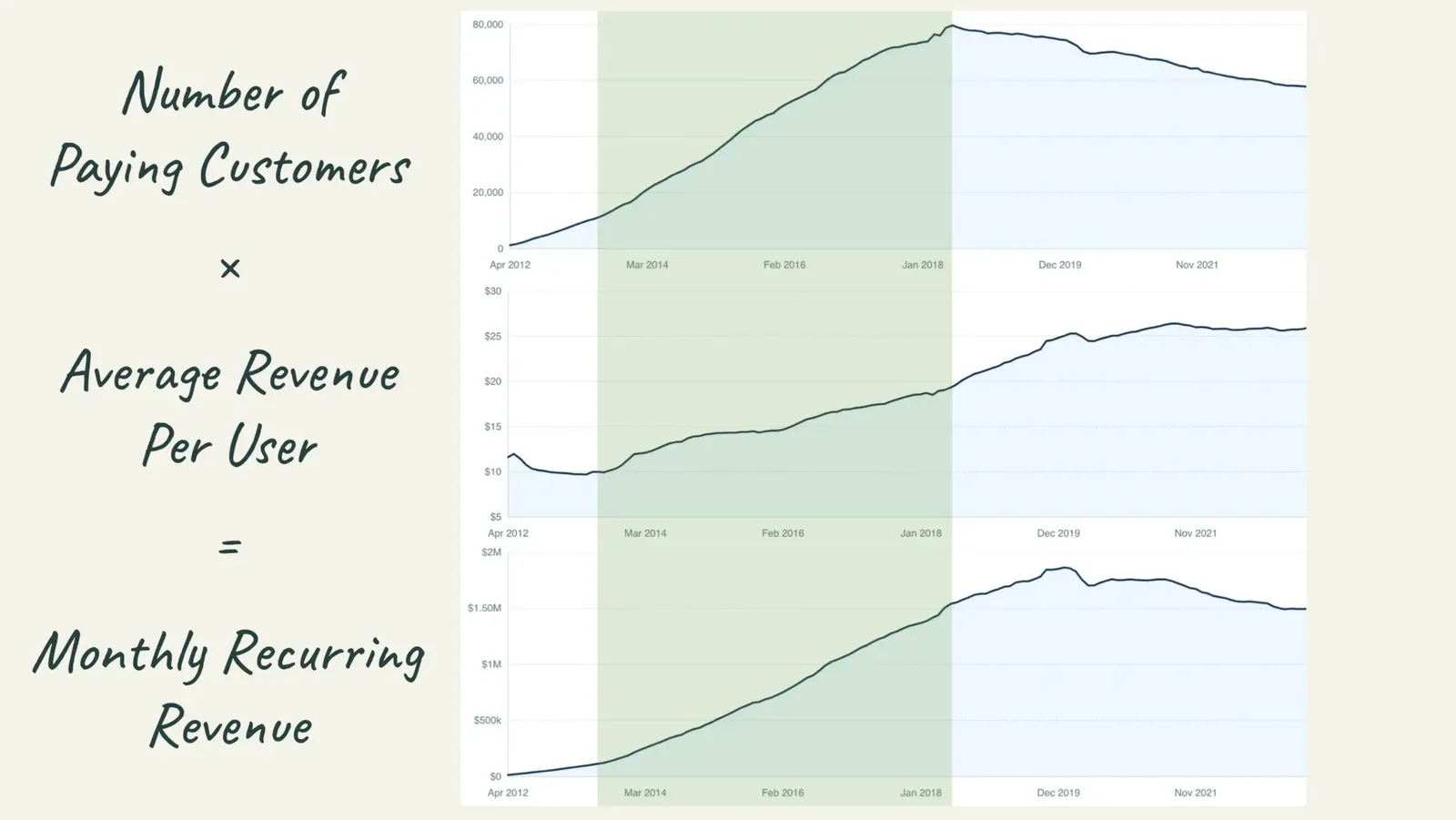
Buffer가 커지면서 초점은 소규모 크리에이터에서 D2C 브랜드로 옮겨 갔습니다. 제품을 여러 개로 늘리고 업셀로 사용자당 평균 매출(ARPU)을 키웠습니다. ARPU가 계속 오르기만 한다면 고객 수가 줄어드는 것은 받아들일 만한 교환으로 보였습니다. 그런데 고객 수는 계속 떨어지기만 했습니다.
2022년에 이르러 Buffer는 3년째 내리막을 걷고 있었습니다. MRR은 7.57% 줄었고, 57만 3,000달러의 순손실에 런웨이는 21개월이었습니다.
ChartMogul의 데이터를 살펴보니, 예전에 성장했던 시기에는 고객 증가가 ARPU 증가를 앞질렀다는 사실이 보였습니다. ARPU를 올려 성장하는 전략을 계속 밀고 나간다면 가격을 끊임없이 인상해야 하는데, 이는 엔터프라이즈 SaaS 기업이 쓰는 방식이었습니다.
그래서 Buffer는 출발점이었던 사명, 즉 소규모 크리에이터와 창업가를 돕는 일로 돌아갔습니다. 새 전략은 더 낮은 시장의 고객을 끌어들이고 신규 사용자로 성장하는 데 초점을 맞췄습니다.
사업을 되돌리기 위해 팀은 회사가 성장을 다루는 방식을 다시 세워야 했습니다. 그 일환으로 Simon Heaton을 그로스 마케팅·데이터 부문 시니어 디렉터로 합류시켰습니다. 비싼 유료 광고에 의존하지 않고 회사의 오가닉 성장 엔진을 찾아내 키우는 것이 그의 역할이었습니다.
“SEO and content marketing were a huge part of how Buffer grew in the past,” 그는 이렇게 설명합니다. “But we had to reignite content marketing and be much more deliberate about creating content that builds awareness.”
인지도에 다시 집중하는 흐름은 마케팅 팀에만 머물지 않습니다. Buffer 직원의 약 90%가 자신이 만들고 디자인하고 풀어낸 것을 꾸준히 공유하며, 그 콘텐츠의 상당 부분을 Buffer로 계획하고 게시합니다.
People go on LinkedIn and X and Threads and talk about what they're building, what's going on at Buffer, to start to build more awareness of the brand. We see a lot of our high quality audience coming from those channels. And that's allowed us to garner millions of impressions for pretty much free.
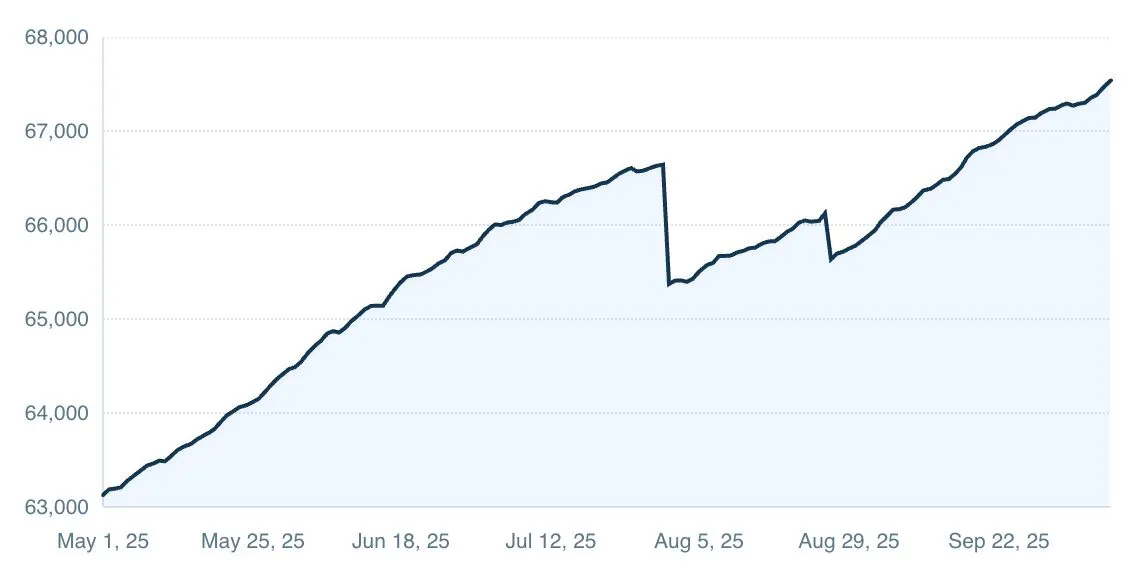
좋은 제품을 만들면 입소문이 나지만, 브랜드가 지키는 가치를 보여 주는 것도 마찬가지입니다. 2025년 Buffer는 갱신 전에 비활성 계정 1,200개를 자동으로 해지하겠다고 밝혔고, MRR 1만 4,000달러를 스스로 포기했습니다. 이 결정은 큰 공감을 얻어, SaaS 업계의 여러 사람이 Buffer의 방식을 공유하고 응원하게 만들었습니다.
 Joel Gascoigne @joelgascoigne
 This is one of my favorite charts at Buffer right now.
It's the chart of our number of paying customers. And it might look like we've just experienced some awful churn, but that's not what it is.
Those drops in number of paying customers are when we proactively cancelled... Show more
Buffer는 SEO 전략의 연장선에서 핵심 시장에 닿기 위해 답변 엔진 최적화에도 투자했습니다. 지금은 리드의 40% 이상이 ChatGPT를 통해 들어옵니다.
Buffer는 고객과 더 가까운 관계를 만들기 위해 Discord 서버도 열었습니다. 1만 명 규모의 이 커뮤니티는 새 기능을 가장 먼저 접하고, 제품의 방향을 잡는 데 도움이 되는 피드백을 줍니다. 가장 활발한 멤버 일부는 Buffer와 새로운 출시를 자연스럽게 알리는 사람이 되기도 했습니다.
We have a couple community members who have become so involved with Buffer that they're also just naturally promoting our launches. That type of evangelism is amazing and has been a huge part of reigniting that organic flywheel.
Buffer의 MRR은 약 150만 달러에서 바닥을 찍었습니다. 그 후 브랜드 인지도와 독립 크리에이터에 다시 집중한 것이 강한 회복을 뒷받침했습니다. 오늘날 회사는 8만 명에 가까운 유료 고객을 확보하고 있으며, 역대 최고인 ARR 2,600만 달러, MRR 약 210만 달러에 도달했습니다.
All these things center around Buffer's brand: the culture, the people who work there, the decisions we make. We try to optimize for value creation over value extraction. And we even think about growth internally as value-led. And so that core part of Buffer, and that brand, is our biggest growth asset and loop that we have. One of the strongest things that I uncovered for Buffer is that we can utilize all these different facets. All that together kind of makes this visibility engine.
제품 결정을 매출과 연결하기
ChartMogul은 Buffer가 비즈니스를 살피고 다음 투자처를 정하는 데 여전히 중요한 역할을 합니다. 회사의 데이터 스택에서 BigQuery, Segment, Mixpanel, Hex, Customer.io와 나란히 자리하고 있습니다.
We look at everything in [ChartMogul]. A lot of us are in there every day. I know Joel [Gascoigne, CEO] is in there every day. We use it to look at overall recurring revenue health. We distill into segments and tiers and we try to figure out what's actually driving the topline growth. And it's really cool because the layer is interconnected to our modeling for the business. It's been super valuable to build an understanding of how the various pieces lead to subscriber growth. The MRR movement report is my favorite report by far. It helps us conceptualize the moving parts of a SaaS business.
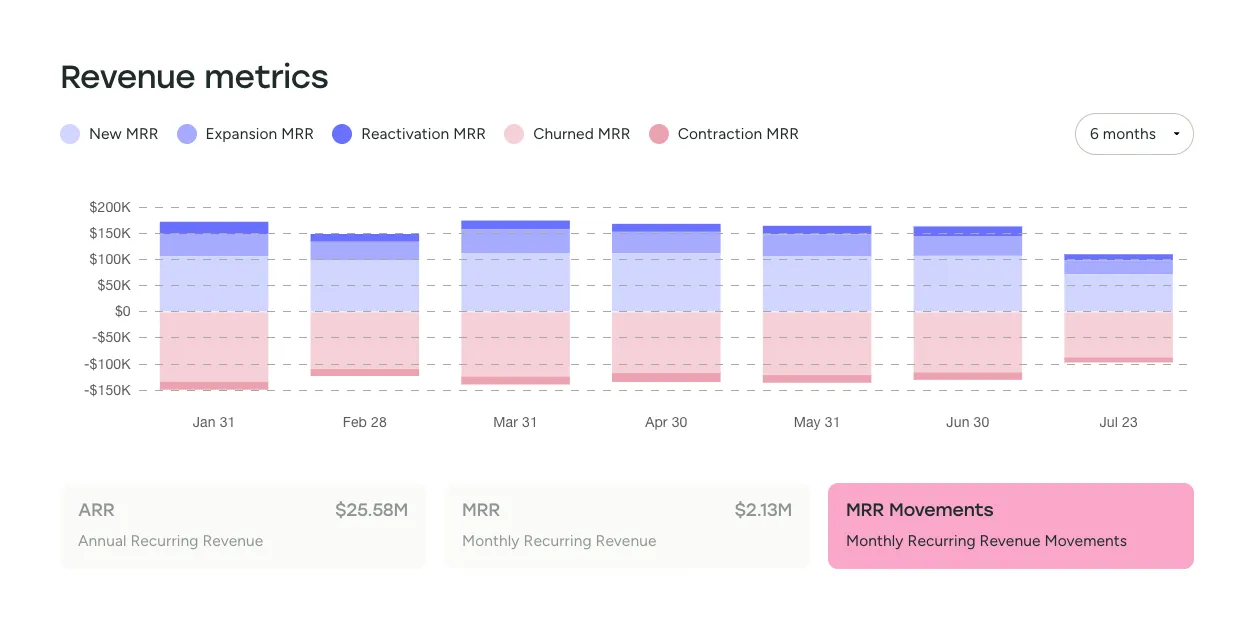
전략 전환의 하나로 Buffer는 제품군을 하나의 가격을 가진 단일 제품으로 통합했습니다. 새 기능을 만들기 전에 팀은 ChartMogul에서 고객 기반을 세그먼트로 나눠, 집단마다 어떻게 행동하는지 파악하고 출시가 매출에 미칠 영향을 가늠합니다.
We're still [building for the] down-market but we have mid-market customers that are much higher MRR bands than our average user. They use the product slightly differently and they have different needs. So if we're building for them, we recognize that the adoption might not be to the same degree as a down-market focused feature because there's a smaller cohort there, but the revenue or retention of that revenue associated with the individuals who will use that feature is much higher.
Buffer의 확장 매출은 주로 고객이 계정에 소셜 미디어 채널을 더 추가할 때 생깁니다. ChartMogul은 어떤 고객 세그먼트가 그 확장을 만들어 내고 있는지, 세그먼트별 유지 패턴이 어떻게 다른지 볼 수 있게 해 줍니다.
Buffer가 실험을 진행하면 팀은 그 결과로 생긴 MRR 변동을 ChartMogul에서 확인할 수 있습니다. 결과를 매출과 다시 연결하면 가설을 평가하고 시간과 자원을 어디에 쓸지 정하는 데 도움이 됩니다.
We always want to be able to tie [tests] back to [understanding] ‘how much [revenue] did this actually yield?’ That's where ChartMogul comes in. A lot of these tools are pretty interoperable. So we can either pull that data all into Hex or we could pull it into Claude and analyze from multiple sources. And that's been super powerful to inform us of where the opportunities lie.
Buffer가 성장으로 돌아온 것은 하나의 채널이나 기능, 캠페인 덕분이 아닙니다. 처음 돕고자 했던 고객을 중심으로 브랜드와 제품, 커뮤니티, 성장 전략을 다시 이어 붙인 결과였습니다.
ChartMogul은 그러한 제품과 성장 결정이 매출에 어떻게 나타나는지 팀에 분명하게 보여 줍니다. 다만 더 큰 교훈은 Buffer 자신의 것입니다. 16년이 지난 지금도 의미 있는 존재로 남는다는 것은 무엇을 지키고 무엇을 다시 생각할지, 그리고 그 둘이 서로를 강하게 만들도록 어떻게 엮을지를 아는 일입니다.